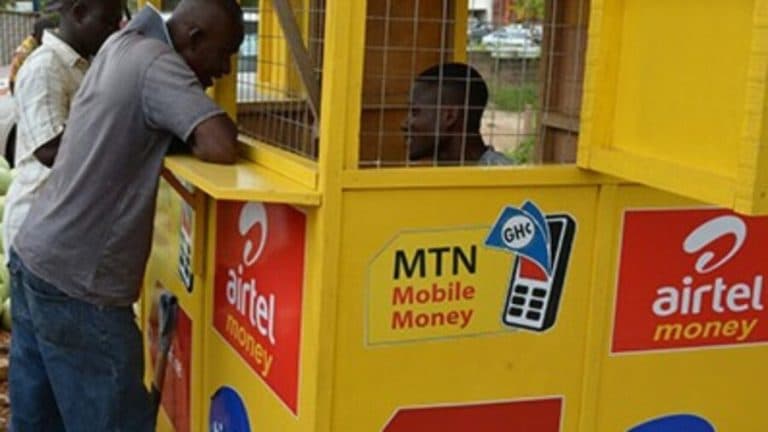
Ghana’s mobile money revolution has been recognized and celebrated as one of Africa’s most successful financial inclusive enterprises.
The mobile money enterprise is entering a more difficult phase and has reached the point where a simple tool built to serve the unbanked begins to look systemically important enough to test the country’s financial stability framework.
Dr Richmond Atuahene, banking and finance expert has argued that Ghana’s mobile money ecosystem has delivered undeniable benefits, giving millions of previously unbanked people access to payments, savings, credit and insurance through simple mobile devices.
He however, warned that same system now faces complex regulatory, technological and economic risks that cannot be managed with yesterday’s light-touch supervisory assumptions.
His warning is deemed timely because Mobile money is no longer a peripheral payment channel used mainly for small transfers. It is now one of the principal arteries of Ghana’s consumer economy.
The Central Bank of Ghana data show that mobile money transaction value has reached GH¢493.20 billion in April 2026, involving 967.00 million transactions.
Registered mobile money accounts rose to 83.00 million, while active accounts stood at 26.00 million, with active agents rising to 534,000.
With this scale, the question is no longer whether mobile money promotes inclusion. It clearly does with an urgent question of whether Ghana’s regulatory architecture has kept pace with the power, complexity and concentration of the ecosystem it helped create.
Dr Atuahene’s central concern is regulatory arbitrage with traditional banks operating under tight prudential regulation, including capital adequacy rules, liquidity requirements, deposit insurance obligations, licensing processes and extensive reporting duties.
By contrast, Mobile money operators are generally regulated as payment service providers rather than deposit-taking institutions often facing lighter capital requirements with less intensive supervision.
This gap made sense during the early years of mobile money where heavy bank-style regulation could have strangled innovation, raised compliance costs and slowed financial inclusion.
However, the success of mobile money has altered the risk equation. What was once a small, low-value digital convenience has become a mass-market financial infrastructure as Ghana’s model creates blurred accountability.
Under the bank-led partnership framework described by Dr Atuahene, mobile network operators partner with licensed banks to offer mobile money services. The bank manages the float and holds the licence-related financial responsibility, while the mobile operator brings the brand, customer base, technology and agent network.
This layered structure creates a governance problem.
In the case of an emergence problem, who is truly responsible: the bank that holds the float, the mobile network operator that controls the customer relationship, the agent who executes the cash transaction, or the regulator whose mandate sits across banking, payments and telecommunications?
The answer matters because mobile money is no longer only about convenience. It is about trust. And trust can evaporate quickly in a digital system where millions of users may not understand the legal distinction between a bank deposit, an electronic wallet balance and a telecom-enabled payment service.
Lighter regulation calls for an argument to help mobile money expand access, particularly among rural populations and women because it has introduced vulnerabilities around consumer protection, data privacy and systemic stability.
By Martha Seyram Jackson || Metro Digital