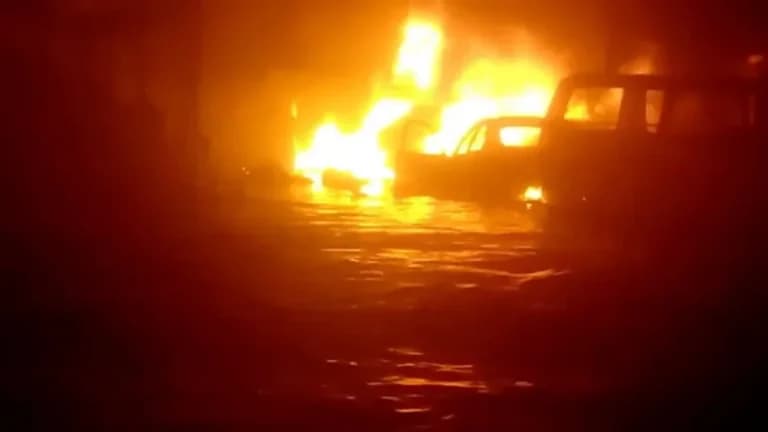
Eleven years ago today, Ghana witnessed one of the darkest moments in its history.
On the night of June 3, 2015, torrential rains triggered devastating floods across Accra. As residents scrambled for safety, a massive explosion at a fuel station near Kwame Nkrumah Circle turned an already deadly situation into a national catastrophe. More than 150 people lost their lives, hundreds were injured, and countless families were left shattered.
More than a decade later, the painful memories remain vivid. Yet an uncomfortable question continues to linger: has Ghana truly learned the lessons of June 3?
For many observers, the answer is far from clear.
Every rainy season brings renewed fears of flooding in parts of Accra and other cities. Roads become submerged, homes are inundated, businesses suffer losses, and residents are forced to navigate dangerous conditions that have become an almost annual occurrence.
The June 3 disaster exposed deep weaknesses in urban planning, drainage management, environmental enforcement, and emergency preparedness. Eleven years later, many of those challenges persist.
The tragedy unfolded after hours of heavy rainfall overwhelmed Accra’s drainage systems. Floodwaters rapidly engulfed major roads and communities, including the busy Kwame Nkrumah Circle area. As people sought shelter from the storm, many gathered at a GOIL filling station, believing it would offer protection from the rising waters.
Unknown to them, fuel from underground storage tanks had leaked and spread across the floodwaters. When the fuel was ignited, reportedly by a spark, a huge explosion tore through the area. The resulting inferno trapped and killed scores of people who had sought refuge from the rain.
The disaster claimed at least 159 lives. Many survivors suffered severe burns and life changing injuries. Families lost breadwinners, children lost parents, and communities were left mourning a tragedy that shocked the nation.
In the aftermath, the government declared three days of national mourning and established an investigative committee. The disaster sparked national discussions about poor drainage systems, uncontrolled development, waste management, and the location of fuel stations in densely populated areas.
Promises were made. Reforms were proposed. Authorities pledged that such a tragedy would never happen again.
However, recurring incidents continue to raise concerns.
In recent years, flooding has remained a major challenge in several parts of the country. At the same time, questions have persisted over the enforcement of safety regulations governing fuel stations and hazardous facilities.
The latest concerns were emphasized by an incident at Mamfe Amamprobi, where a fuel tanker carrying thousands of litres of petrol was involved in a road crash and began leaking fuel. The accident triggered fears among residents and renewed public debate about fuel transportation safety and emergency response systems.
Although disaster was avoided in that case, the incident served as a reminder of how quickly accidents involving petroleum products can escalate.
Critics argue that some fuel stations continue to operate in locations that raise safety concerns, while enforcement by regulatory agencies is often seen as inconsistent. Others point to rapid urbanisation, weak planning controls, and growing pressure on infrastructure as factors that increase the country’s vulnerability to disasters.
Environmental experts have repeatedly warned that blocked drains, indiscriminate dumping of waste, and construction on waterways continue to worsen flooding risks. Climate change is also intensifying extreme weather events, making heavy rainfall more frequent and more destructive.
For survivors of June 3 and families of those who died, the anniversary is not simply a moment of remembrance. It is a reminder of unfinished business.
Many continue to call for stronger enforcement of safety regulations, better urban planning, improved drainage infrastructure, and greater accountability from institutions responsible for protecting lives and property.
As Ghana marks eleven years since the June 3 disaster, the memory of those who perished remains a solemn chapter in the country’s history.
But remembrance alone is not enough.
The true tribute to the victims lies in ensuring that the failures which contributed to the tragedy are addressed. Until recurring floods, infrastructure deficiencies, and safety concerns are tackled decisively, the question that has followed Ghana for more than a decade will remain unanswered.
Has the country truly learned the lessons of June 3?