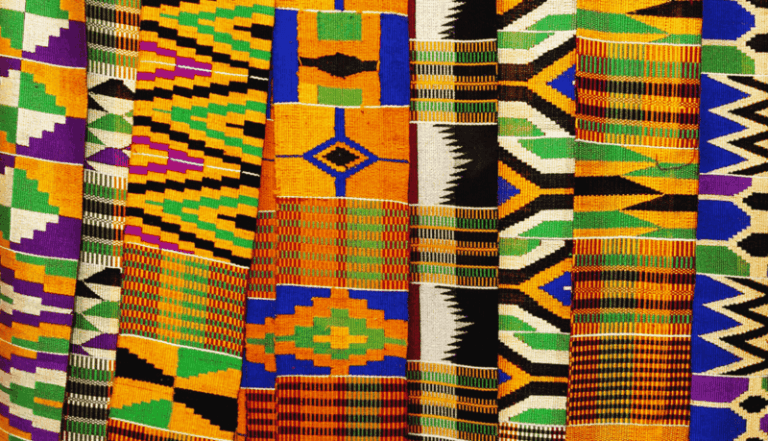
Kente cloth, one of Ghana’s most recognisable cultural symbols, continues to stand as a powerful expression of heritage, pride and identity centuries after it first appeared in the Ashanti kingdom.
Known locally as Nwentoma, meaning woven cloth, Kente traces its origins to the 17th century in present day Bonwire in the Ashanti region.
According to Ashanti folklore, two brothers Kurugu and Amayao discovered the craft after observing a spider carefully spinning its web in the forest.
The story says the brothers spent days watching the intricate patterns of the spider, believed to be the legendary Anansi, before returning home to imitate the designs using raffia fibres. Their first cloth was woven in simple black and white patterns.
When the cloth was later presented to the Asantehene, the king of the Ashanti kingdom, he was said to have been deeply impressed.
The ruler encouraged the brothers to refine their technique, helping transform the cloth into a treasured royal fabric.
Over time, the weaving evolved into the colourful silk Kente known today. Its striking geometric patterns and bright colours carry deep cultural meaning.
Yellow represents wealth, fertility and royalty.
Red symbolises life, sacrifice and spirituality.
Green stands for growth, harvest and renewal.
Blue reflects peace, harmony and love.
Black represents maturity and spiritual strength.
Historically, Kente was reserved exclusively for kings and queens in the Ashanti kingdom and was worn mainly during important ceremonies and sacred events. The cloth signified prestige, power and social status.
Today, Kente has moved beyond royal courts and is widely worn across Ghana and the diaspora during major life events such as weddings, graduations and traditional festivals. For many, the cloth has become a proud symbol of African identity.
The name Kente itself is believed to come from the Akan word kɛntɛn, meaning basket, a reference to the basket like patterns formed by the weaving.
By the late 18th and early 19th centuries, Ashanti weavers had perfected silk versions of the cloth. When British explorer Thomas Edward Bowdich visited the Ashanti kingdom in 1817, he described Kente as cloths of incredible size and weight with endless colours and designs.
While the Ashanti origin story remains widely celebrated, historians also point to the role of Ewe weavers in the development of the textile. Ewe Kente is known for its distinctive double woven bands and has its own long history.
Oral tradition suggests Ewe weaving began around the 16th century after migrants from present day Benin Republic and western Nigeria settled in parts of what is now Ghana.
By the 18th century, Keta had emerged as a major weaving centre, with early records appearing in a 1718 report by the Dutch West India Company. The craft later expanded north of the Volta River by the late 19th century.
Despite the debate over its exact origins, Kente remains one of Ghana’s most celebrated cultural treasures.
In December 2024, the United Nations Educational, Scientific and Cultural Organization recognised Kente cloth as an Intangible Cultural Heritage, further cementing its place as a fabric of immense cultural value and historical importance.
Story by Nana Akua Amponsah || Metro Digital