A new law reforming legal education in Ghana is being hailed as a breakthrough moment, promising wider access to the profession and the removal of long-standing barriers that have limited who can become a lawyer.
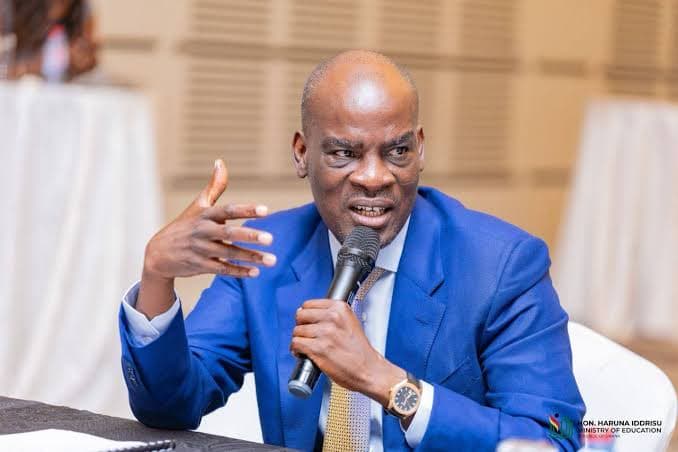
The Member of Parliament for Twifo Atti Morkwa, David Theophilus Dominic Vondee, welcomed the passage of the 2026 Legal Education Bill, describing it as a decisive step toward fairness and opportunity in the country’s legal training system.
Speaking on Metro TV’s Good Morning Ghana, he said the reforms mark a clear departure from what many have criticised for years as an overly restrictive and centralised structure.
“A newly passed law aimed at reforming legal education in Ghana is being hailed as a major step toward expanding access and ending long-standing restrictions on who can become a lawyer,” he said.
Under the new system, students can study law at any accredited university before sitting a centralised professional examination to qualify for practice. The change effectively removes the bottleneck associated with the limited intake at the Ghana School of Law, which has historically controlled access to professional legal training.
Institutions such as the University of Ghana, Kwame Nkrumah University of Science and Technology and the Ghana Institute of Management and Public Administration, alongside accredited private universities, will now be able to offer law programmes. Graduates will then take a standardised examination supervised by a central legal body.
The approach mirrors international professional certification models, allowing candidates flexibility in their studies while maintaining a uniform standard for qualification.
For years, critics have argued that Ghana’s legal education system created unnecessary obstacles for qualified students. The limited capacity of the professional training stage meant many applicants were turned away despite meeting academic requirements.
“This idea that law is for a select few is what we are moving away from,” Vondee said, adding that the previous system was restrictive and, in some respects, discriminatory.
He emphasised that legal education should not be viewed only as a pathway to courtroom practice but as a valuable asset across multiple fields, including business and governance.
“In Parliament, for example, legal knowledge is essential to effectively contribute to debates and understand the Constitution,” he noted.
Vondee also credited John Dramani Mahama for delivering on a promise to expand access to legal education, and praised legal experts whose input helped shape the reforms.
He described the passage of the bill as a “remarkable achievement” that aligns with broader efforts to strengthen Ghana’s education sector, including investments in infrastructure and increased funding.
“This is about opportunity,” he said. “Now, anyone with the ambition and ability can study law, sit for the exams, and become a lawyer.”