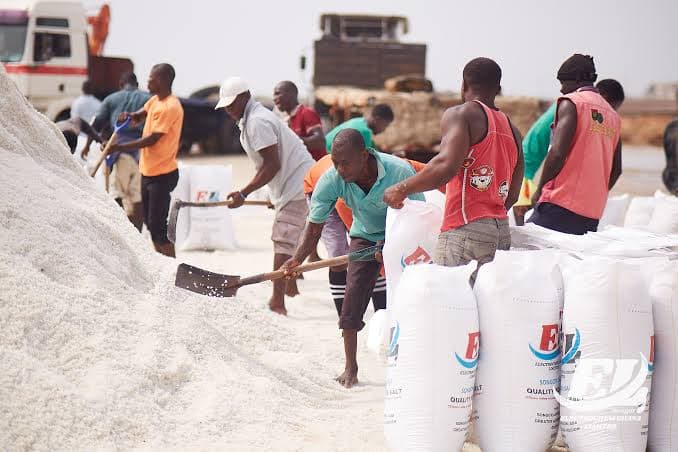
The Director of the Centre for Environmental Management and Sustainable Energy, Benjamin Nsiah, has clarified that a recent civil society tour of Electrochem’s operations at the Ada Songor Lagoon did not reveal any new investment by the Minerals Income Investment Fund in the company.
Speaking on Good Morning Ghana on Metro TV with host Moro Awudu, Mr Nsiah said discussions during the tour focused on the potential of Ghana’s salt industry and the benefits of Electrochem’s existing operations, not on any increase in MIF’s equity stake.
The clarification follows public debate triggered by media reports suggesting that MIF had increased its investment in Electrochem Ghana Limited.
On Tuesday, MIF issued a statement rejecting those claims and said the reports created a false impression.
“MIF has not increased its investment in Electrochem Ghana Limited beyond its existing equity position,” the fund said, adding that any suggestion of a fresh investment was “misleading and does not reflect the true state of affairs”.
Mr Nsiah said civil society organisations were invited by Electrochem to better understand the company’s operations, investment levels, job creation efforts and future expansion plans.
“None of the CSOs stated that MIF had increased its investment,” he said.
“What we recognised was that MIF already has an investment in Electrochem, and we commended that decision because we believe the salt industry has strong long term potential.”
He described salt production as a relatively sustainable industry with significant opportunities for exports, employment and local development.
According to him, Electrochem’s plans to scale up production could create thousands of direct and indirect jobs in the Ada area.
Mr Nsiah also said some civil society groups had encouraged Electrochem to seek additional financing, including private investment, to support future expansion.
However, he stressed that this was a recommendation for future growth and should not be interpreted as confirmation that MIF had already made a new investment.
“We actually called for increased investment because we think the sector has huge potential,” he said.
“But that is different from saying MIF has already increased its stake.”
MIF said it remains engaged with Electrochem on matters relating to dividends on preference shares and delayed royalty payments, while reiterating its commitment to transparency and accurate public communication.
The exchange emphasizes growing interest in the Ada Songor salt project, which many analysts see as a strategic industry capable of boosting exports and creating jobs if supported by a clear national policy.