
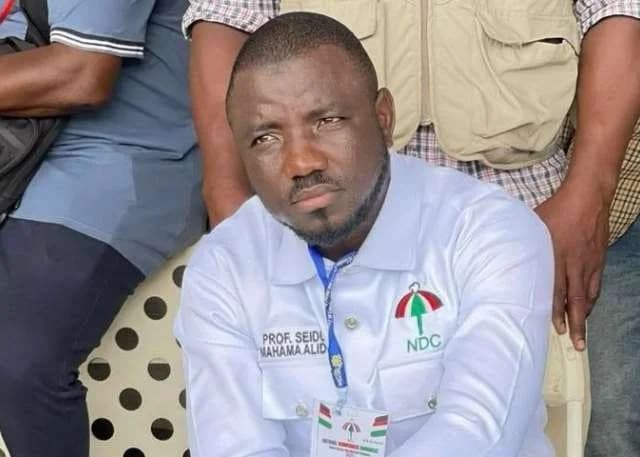
Prof. Seidu Mahama Alidu has urged members of the governing National Democratic Congress to remain focused on governance and party unity amid growing discussions about who could succeed President John Dramani Mahama in the future.
Speaking on Metro TV’s Good Morning Ghana, the Tamale Central MP said internal competition within political parties was normal in every democracy, but warned that premature succession politics could distract government officials from their responsibilities.
His comments follow recent remarks by NDC National Chairman Johnson Asiedu Nketiah over changes to the party’s front bench in Parliament, a decision that affected senior figures including Haruna Iddrisu and Muntaka Mohammed Mubarak.
Prof Alidu said political parties naturally groom leaders to remain competitive and sustain their relevance, stressing that internal democratic competition should not be viewed negatively.
“Political parties are institutions made up of people with shared ideologies who seek political power to implement their vision,” he said. “So it is not a bad thing for individuals to aspire to leadership.”
However, he cautioned that many of the names being mentioned as possible successors to President Mahama are currently serving in government and must prioritise their official duties.
According to him, any action that shifts attention away from governance could damage party cohesion and weaken public confidence in the administration.
He said those hoping to lead the party in future would ultimately campaign on the record and legacy of the current government, making it important for them to contribute to its success.
Prof Alidu also defended recent commentary and polling around possible future candidates, saying elections are a process rather than a one time event.
He noted that opinion polls and political analysis play an important role in shaping public debate, guiding strategy and helping politicians assess their standing.
“Polls are not only about predicting winners,” he said. “They also help policymakers understand public sentiment and the direction of the country.”
On the controversy surrounding Asiedu Nketiah’s ongoing “thank you tour”, Prof Alidu said such engagements were common after elections and could help manage expectations among party supporters.
He explained that many grassroots supporters expected quick benefits after voting a party into power, including jobs and development opportunities, making it necessary for leaders to engage and reassure them.
Still, he acknowledged concerns raised by some party members over the composition of the tour and the messages being delivered during the engagements.
Some critics, he said, believe a party thank you tour should involve a broader representation of national executives rather than only the chairman.
Others have questioned whether certain comments made during the tour have helped unite the party or reopened divisions, particularly after references were made to the reshuffle involving Haruna Iddrisu and Muntaka Mohammed.
Prof Alidu admitted that the decision to reshuffle the front bench had upset some members of the party, even though others believed it was necessary.
“A lot of people were pained by that decision,” he said, adding that some believed recent comments had revived old wounds within the party.
Despite the tensions, he expressed confidence in the NDC’s internal conflict resolution structures and said efforts were likely ongoing behind the scenes to preserve unity.
He maintained that the party remained capable of managing internal disagreements while keeping its broader political objectives intact.



