
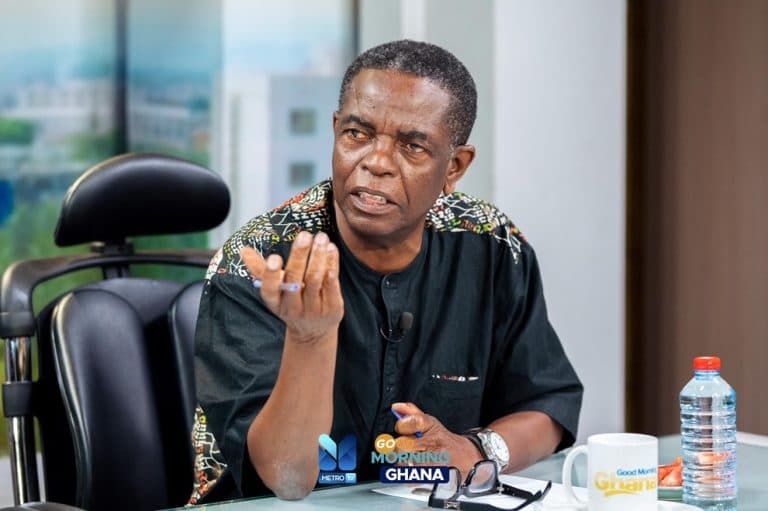
Veteran journalist and former Managing News Editor of the Insight newspaper, Kwesi Pratt Jnr, has criticised efforts by the Office of the Special Prosecutor (OSP) to extradite former Finance Minister Ken Ofori-Atta, describing the process as “pure theatre”.
Speaking on Metro TV’s Good Morning Ghana programme on Wednesday, June 17, Mr Pratt argued that if the OSP has sufficient evidence against Mr Ofori-Atta, it should proceed with prosecuting him in absentia rather than focusing on extradition.
He said a recent court ruling in the United States had been widely misunderstood, stressing that it related solely to Mr Ofori-Atta’s immigration status and had no bearing on any extradition proceedings.
“The court’s landmark ruling was strictly issued within the boundaries of a United States immigration proceeding. It had nothing to do with the extradition request,” Mr Pratt said.
“The scope of the court’s definitive decision remained fundamentally focused on whether Mr Ofori-Atta met the necessary statutory and legal requirements for an adjustment of status to a permanent resident. That’s all. It has nothing to do with the extradition request.”
While acknowledging that the extradition process could continue independently, Mr Pratt questioned the necessity of pursuing it.
“I agree that there’s too much theatre in the attempt to prosecute Mr Ofori-Atta. There’s so much theatre, it’s unbelievable,” he said.
Citing Article 19 of Ghana’s Constitution, Mr Pratt argued that a criminal trial can proceed without the accused being physically present if the individual refuses to appear after being duly notified.
“There is no reason why Mr Ofori-Atta cannot be prosecuted in his absence. There is no reason whatsoever,” he said.
“So all of this rigmarole about extradition requests and so on, for me, it’s pure theatre. Just theatre.”
Mr Pratt maintained that if prosecutors believe they have evidence of wrongdoing, they should allow the courts to determine the matter.
“If there is evidence that Mr Ofori-Atta has committed crimes, he should be put on trial in his absence, and the courts will make a determination of his guilt or innocence,” he said.
He also argued that extraditing the former minister would not necessarily advance the prosecution’s case, noting that accused persons have a constitutional right to remain silent.
“The law states very clearly that no accused person has an obligation to assist the prosecution,” he said.
“Even if you brought Mr Ofori-Atta here, if you managed to secure his extradition to Ghana and he decided not to talk, it would be within his rights. So what’s all this noise about extradition? It’s funny. It’s just funny theatre.”
Responding to suggestions that investigators must first obtain statements from Mr Ofori-Atta before proceeding, Mr Pratt insisted that the Constitution provides a clear pathway for trials to continue where an accused person declines to appear.
“If his conduct suggests that he doesn’t want to come, you can proceed,” he said.
Quoting Article 19, he added: “The trial of a person charged with a criminal offence shall take place in his presence unless he refuses to appear before the court for the trial to be conducted in his presence after he has been duly notified of the trial.
“It’s very clear. Very, very clear. What can be clearer than this?”



