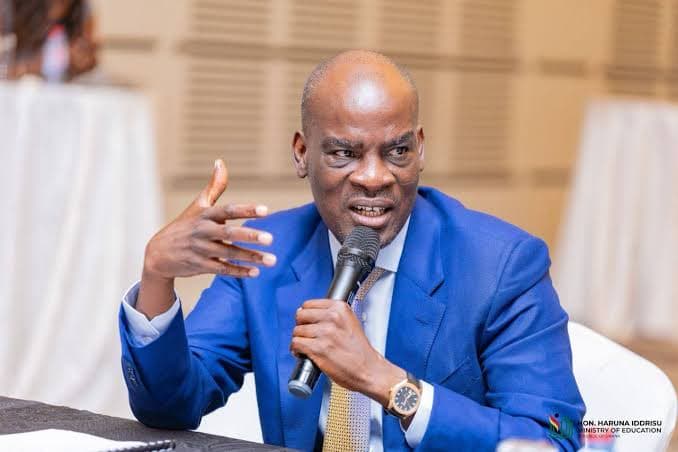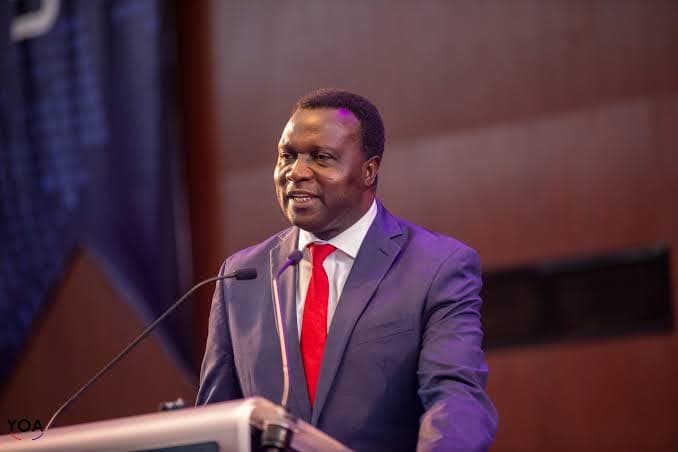
Former Education Dr. Minister Yaw Osei Adutwum has described Ghana’s poor performance in Mathematics at the West African Senior School Certificate Examination (WASSCE) as a major national crisis, arguing that the problem should have been identified and addressed long before students reached their final examination.
According to him, the number of students recording D7 to F9 in Mathematics has risen sharply in recent years, exposing weaknesses that the education system should have tackled much earlier.
Sitting down with Paul Adom-Otchere on Metro TV’s Good Evening Ghana on Tuesday, September 8, Dr Adutwum compared students who failed Mathematics in 2025 to 2023 and 2024 when he was the Education Minister.
He said even after a subsequent recovery process 183,233 students still obtained grades between D7 and F9 in Mathematics.
According to Dr Adutwum, the figures should not come as a surprise because the education system has opportunities to identify struggling students before they sit their final examinations.
“You don’t wait till WASSCE to find out that they have failed,” he said.
He argued that students who repeatedly struggle with particular subjects should receive targeted support while they are still in school.
He said the system should be able to identify students who are falling behind in Form One and provide interventions before their weaknesses become entrenched.
“This is a predictable policy failure,” he said.
Dr Adutwum also pointed to the performance of students in other subjects, saying the problem extends beyond Mathematics.
He cited 177,311 students who failed Integrated Science and said the number of students who performed poorly in Social Studies was also significant.
However, he said Mathematics and English deserve particular attention because of their importance to students seeking admission to degree programmes.
He argued that Ghana must therefore move away from an education system that waits for final examination results before responding to students’ academic difficulties.
Instead, schools should continuously monitor students’ performance and provide additional support where necessary.
Dr Adutwum said the continuous assessment system could play an important role in this process because students’ performance is recorded throughout their time in school.
He suggested that students who repeatedly fail particular subjects should be given opportunities to reset those subjects, including through vacation classes.
He said the objective should be to ensure that students leave secondary school with the foundational skills needed for further education and employment, rather than simply allowing weaknesses to accumulate until the WASSCE.
“We cannot memorize our way out of poverty,” he said, arguing that Ghana’s education system must focus more on building genuine knowledge and skills.
He said addressing the problem early would also reduce the pressure placed on students, parents and the education system when final examination results are released.