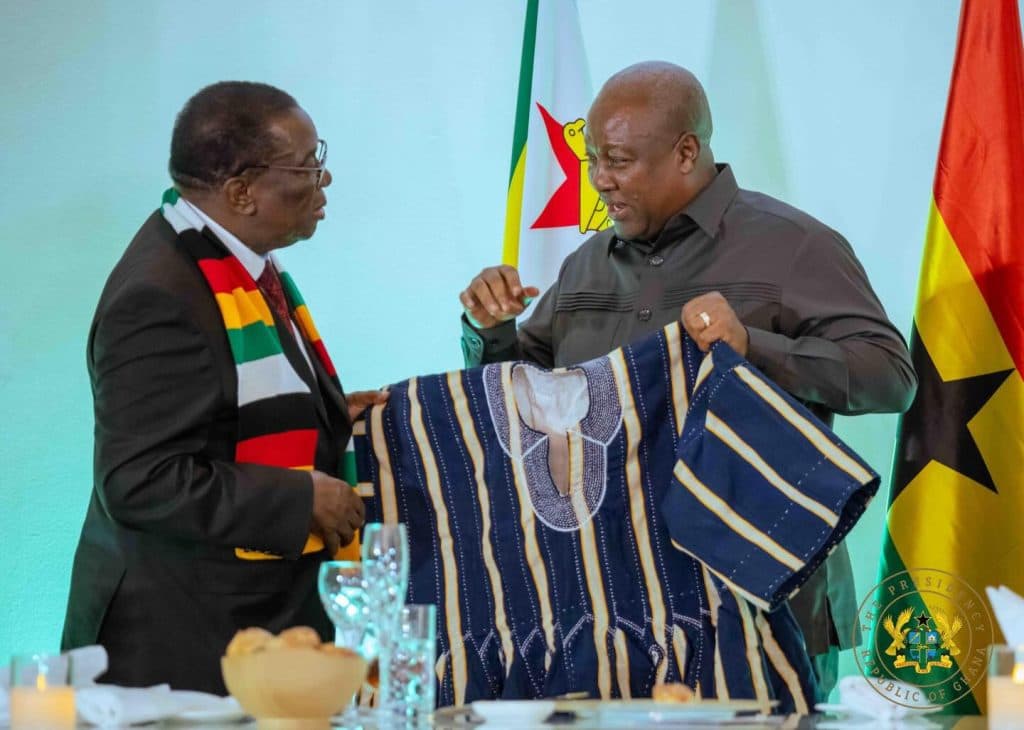
President John Dramani Mahama has presented a traditional Ghanaian fugu and kente cloth to Zimbabwe’s President Emmerson Mnangagwa, using culture and symbolism to underscore the enduring ties between the two countries.
The gesture formed part of a state banquet held in honour of President Mnangagwa, who is on a three-day visit to Ghana aimed at strengthening diplomatic and economic relations. In return, the Zimbabwean leader also presented a gift to President Mahama, marking a mutual exchange that reflected shared values and history.
“There is something profoundly reassuring about the friendship between Ghana and Zimbabwe. It has endured the test of time, it has adapted to changing circumstances, and remains anchored in the mutual respect and trust that exist between us,” President Mahama said.
The exchange comes at a time when the fugu, also known as the smock, has taken on renewed cultural prominence across Africa. In recent weeks, the traditional attire went viral in Zambia after a wave of social media posts celebrating its design and heritage, sparking conversations about African identity and fashion.
Ghana has moved quickly to harness that momentum. The Ministry of Arts, Tourism and Culture has officially instituted Fugu Day to be marked every Wednesday, encouraging citizens to wear the garment and promote local craftsmanship. The initiative is part of a broader effort to position Ghanaian culture as both a unifying national symbol and a driver of tourism and creative industry growth.
Against this backdrop, President Mahama’s presentation of the fugu at a high-level diplomatic event signals a deliberate use of culture as soft power, reinforcing Ghana’s identity while strengthening international partnerships.
President Mnangagwa said his visit would open new avenues for cooperation, particularly through increased business engagement between Ghanaian and Zimbabwean enterprises.
Both leaders reaffirmed their commitment to deepening bilateral relations, with culture, trade and shared history continuing to serve as pillars of cooperation.