
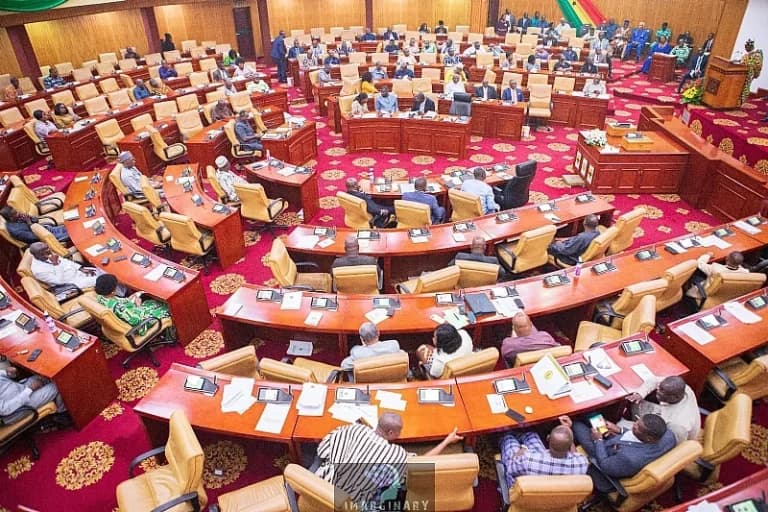
The Economic Fighters League (EFL) has argued that the government’s proposed proportional representation reforms fall short of the electoral changes Ghana needs, insisting that limiting the system to just 24 parliamentary seats will not address the country’s winner-takes-all politics.
In a statement issued on July 31, the group acknowledged the government’s acceptance, in principle, of proportional representation but maintained that the proposal “falls far short of the electoral transformation Ghana requires.”
According to the EFL, restricting proportional representation to only 24 out of 300 parliamentary seats “does little to correct the fundamental distortions of the current system.”
The group argued that proportional representation should not be viewed merely as a way of reserving seats for selected groups but as “a democratic principle that ensures every vote counts and that Parliament reflects the political choices of the Ghanaian people.”
The EFL said it has consistently maintained that Ghana’s first-past-the-post electoral model has entrenched political exclusion, discouraged ideological diversity and denied millions of Ghanaians meaningful representation.
It said the government’s acceptance of the principle represents progress but should be treated only as the beginning of a broader constitutional reform process.
The pressure group also called for an inclusive process in designing the new electoral system. It welcomed the government’s decision to commission an independent study but said the exercise must involve constitutional experts, political movements, civil society organisations, political parties, women, persons with disabilities, youth groups and ordinary citizens.
Describing Ghana as being at “an historic constitutional moment,” the EFL said the focus should now shift from whether proportional representation should be adopted to ensuring its implementation genuinely strengthens democracy instead of becoming “merely a symbolic reform.”
Background
The government has proposed capping the size of Parliament at 300 members as part of its White Paper on the Constitutional Review Committee’s recommendations.
Under the proposal, the current 276 constituency-based seats will be retained, while 24 additional seats will be filled through a proportional representation system aimed at increasing the participation of women, persons with disabilities (PWDs), and young people.
Attorney General and Minister for Justice, Dominic Ayine said an independent study would determine the design of the proportional representation model.
He said the proposal seeks to strengthen inclusion in Parliament while preventing further expansion of the legislature and reducing the cost of governance.



