
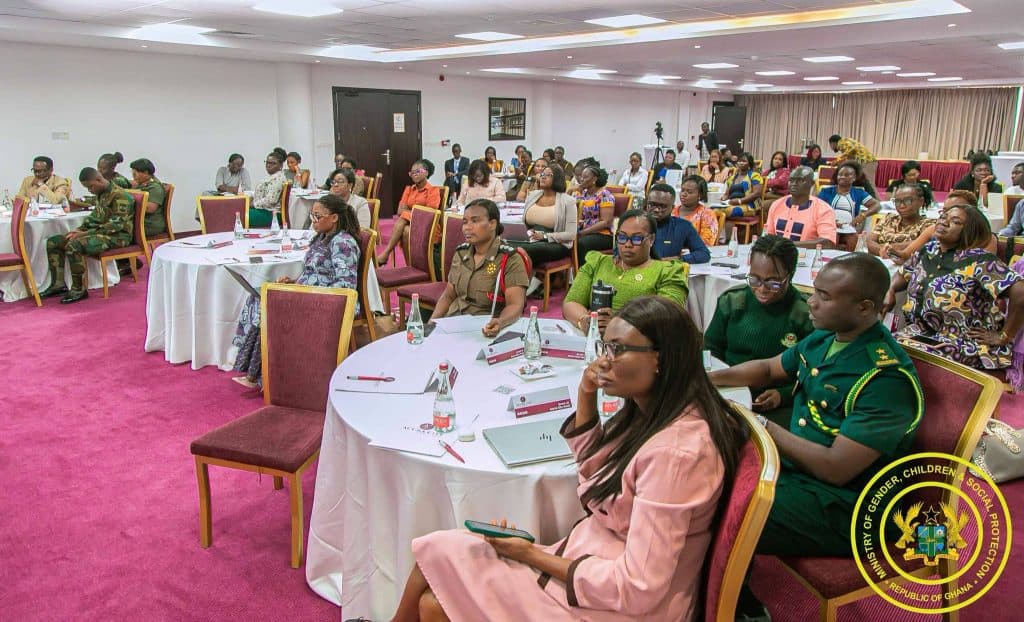
Public institutions have been urged to take concrete steps to implement Ghana’s Affirmative Action (Gender Equity) Act, 2024 (Act 1121), with a focus on improving women’s representation and making gender equity part of everyday decision-making.
The call was made at a one-day capacity-building workshop organised by the Ministry of Gender, Children and Social Protection through the Gender Equity Committee Secretariat, with support from SIGRA (Strengthening Investment in Gender Responsive Climate Adaptation).
The workshop brought together representatives from public institutions to deepen their understanding of the law and help them translate its requirements into policies, programmes, budgets and decisions.
Delivering the keynote address on behalf of the Minister for Gender, Children and Social Protection, Dr Agnes Naa Momo Lartey, the Head of the Gender Equity Secretariat, Vera Karikari Bediako, said public institutions had a responsibility to ensure women were fairly represented in leadership and decision-making.
She said the Act required institutions to consider gender equity in areas including recruitment, appointments, career development, institutional policies and decision-making.
Ms Bediako also drew attention to the reporting obligations under the law, urging public institutions to submit accurate and timely reports on the progress they were making towards implementing the Act.
She said institutions should use the guidelines and reporting templates developed by the Ministry through the Gender Equity Secretariat to ensure their reports were properly documented.
Speaking on behalf of SIGRA and the Government of Canada, Lauren Intven stressed the importance of having reliable gender-disaggregated data to understand where women were participating in decision-making and where gaps remained.
She also called on institutions to strengthen gender-responsive budgeting so that resources were deliberately allocated to address inequalities and support women’s participation.
Participants at the workshop received presentations from experts on the Affirmative Action Act, gender-responsive budgeting and the annual reporting template for tracking progress on gender equity.
The workshop is part of efforts by the Ministry and its partners to move Act 1121 beyond legislation and into practical implementation across public institutions.
The organisers said effective implementation of the law would be important to increasing women’s participation in leadership and decision-making and advancing more inclusive development in Ghana.