
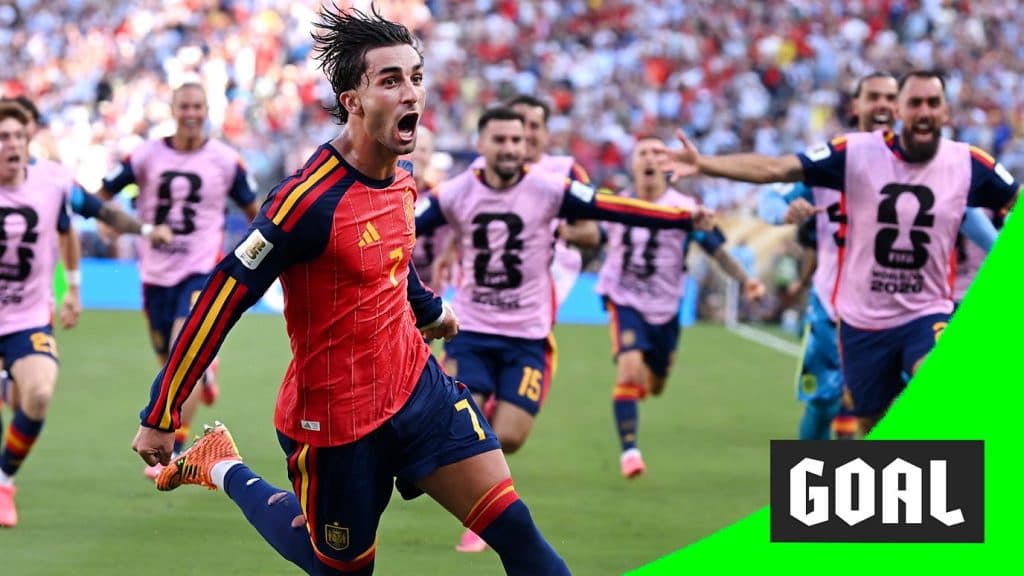
Spain have done it again.
Two years after being crowned European champions in Berlin, La Roja are now world champions too, having beaten Argentina 1-0 in Sunday’s World Cup final in New Jersey. It’s a script Spain have followed before — they won the World Cup in 2010, two years after lifting Euro 2008.
This latest triumph extends a run of dominance across both the men’s and women’s game. Spain are now the first nation to hold the men’s and women’s World Cup simultaneously, having beaten England in the 2023 Women’s World Cup final in Sydney.
The full picture is even more striking. The men’s side also won the 2023 Nations League and Olympic gold in 2024, while the women added back-to-back Nations League titles in 2024 and 2025. Altogether, Spain have picked up 16 world and European titles across every age group, from under-17 level to the senior teams, in just five years.
Spanish football analyst Guillem Balague described it to BBC Sport as something close to a perfect storm — a shared national footballing philosophy that everyone buys into, paired with a refusal to stand still. He pointed out that this mirrors 2010, when the men’s team won the World Cup two years after the Euros, and called this repeat achievement another mountain climbed.
Spain’s Winning Machine
Women’s football (11 titles, 2022–2026)
- Senior: World Cup (2023); Nations League (2024, 2025)
- Under-20: World Cup (2022)
- Under-19: European champions (2022, 2023, 2024, 2025, 2026)
- Under-17: World Cup (2022); European champions (2024)
Men’s football (5 titles, 2022–2026)
- Senior: World Cup (2026); European champions (2024); Nations League (2023)
- Under-23: Olympic gold (2024)
- Under-19: European champions (2026)
A Risky Appointment That Paid Off
When Luis de la Fuente was named head coach in December 2022, few predicted he’d deliver the Nations League, European Championship, and World Cup in such a short span. He stepped in after Spain’s last-16 exit to Morocco at the Qatar World Cup and Luis Enrique’s departure.
Balague called it a genuinely risky call at the time — De la Fuente had never managed a top club, unlike the managers behind three of Spain’s last five European Championship wins in 2008, 2012, and 2024. After his playing career ended in 1994, he spent 15 years working through lower-league clubs, youth setups, and assistant roles before eventually taking charge of Spain’s junior national teams.
Former Spain midfielder Juan Mata credited De la Fuente’s familiarity with the players from their academy days, and framed the current squad as one built for both now and the future.
Since moving up through the under-19s, under-21s, and Olympic squad to the senior job, De la Fuente has built a culture centered on respect — for opponents, for the process, and for patience. At his pre-match news conference in New York on Friday, he described telling his players, several of whom asked what was left to achieve after winning everything at every level, that the next match in September was the only answer that mattered — because this team, in his words, doesn’t stop.
The ripple effects reach club football too. Despite Pep Guardiola stepping away from Manchester City after a decade of success there, Spanish coaches make up roughly a quarter of Premier League managers heading into the 2026-27 season.
Spain are now unbeaten in 38 matches across all competitions — the longest such run by any European or South American nation on record.