
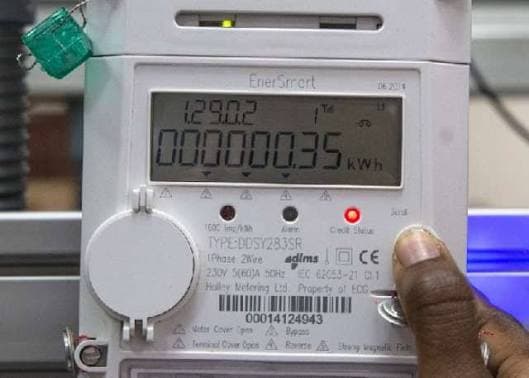
The Ghana Standards Authority (GSA) has warned landlords, estate developers and property managers against using uncertified electricity sub-meters to calculate and recover energy costs from tenants.
The warning forms part of a new directive requiring electricity meters used in Ghana to undergo testing, verification and certification by the GSA.
The Authority says the requirement applies not only to meters used by electricity distribution companies but also to sub-meters installed in residential and commercial properties to apportion or recover electricity costs.
This means landlords and managers of facilities such as malls and estates cannot rely on privately supplied or calibrated meters to bill tenants unless those meters have gone through the required GSA verification process.
The GSA said all electricity meters, regardless of their technology, ownership or billing arrangement, are regulated measuring instruments under the Ghana Standards Authority Act, 2022 (Act 1078).
The directive covers prepaid, postpaid and smart meters, as well as single-phase, three-phase, high-tension and low-tension meters.
Landlords must keep meter records
Under the directive, distributors, property developers and landlords are required to keep a register of meters under their control.
They must also hand over the Certificate of Verification when a property is sold, rented or handed over.
The GSA is particularly asking consumers to check the status of meters used to determine their electricity bills.
“Before accepting a meter, ask for and inspect the GSA seal and Certificate of Verification,” the Authority said.
It further cautioned consumers against allowing anyone to install, open, adjust or replace a meter without evidence that the person has been authorised by the GSA.
Private calibration not enough
The Authority has also drawn a distinction between calibration documents issued by private entities and official verification by the GSA.
It said a foreign type approval, calibration report or conformity certificate, including one issued by a manufacturer, supplier or private laboratory, does not constitute a Certificate of Verification.
“Only an Inspector of Weights and Measures may verify, stamp and certify,” the notice stated.
This means a landlord or property manager cannot rely solely on a supplier’s assurance that a sub-meter is accurate or approved.
Existing sub-meters have until 2028
The GSA has given all meters already installed and in service until December 31, 2028 to undergo testing, verification and certification under the National Electricity Meter Testing Programme.
The exercise is to be carried out according to a phased schedule to be issued by the Authority.
However, the GSA said the certification service is free and warned against anyone charging consumers for it.
“Any person who demands payment for this service shall be reported to the Authority,” it said.
For new meters, there is no such grace period.
With immediate effect, the GSA says no person may sell, supply, accept, install, connect or energise a meter that does not meet the prescribed requirements.
Repaired meters must be re-verified
The directive also affects landlords and property managers who repair, relocate or replace existing sub-meters.
The GSA said a meter that has been repaired, refurbished, reconditioned, removed and re-installed or relocated must be re-verified, re-sealed and re-certified before it is used again.
Meters with broken, missing or tampered seals must be reported within seven days and withdrawn from service.
The Authority has warned that failure to comply could attract administrative penalties, fines or imprisonment, depending on the offence.
It also has powers to seize meters being used in breach of the law, with non-conforming meters liable to forfeiture and destruction.
The directive is being enforced in collaboration with the Public Utilities Regulatory Commission, Energy Commission, Ghana Revenue Authority’s Customs Division, Electricity Company of Ghana and the security agencies.
The GSA says the exercise is intended to support the country’s loss-reduction efforts while protecting consumers who depend on meters to determine how much electricity they pay for.
Consumers who suspect that a meter is uncertified, inaccurate or tampered with have been asked to report the matter to the GSA’s Legal Metrology Department on 0302-500066 or by email at dgsec@gsa.gov.gh