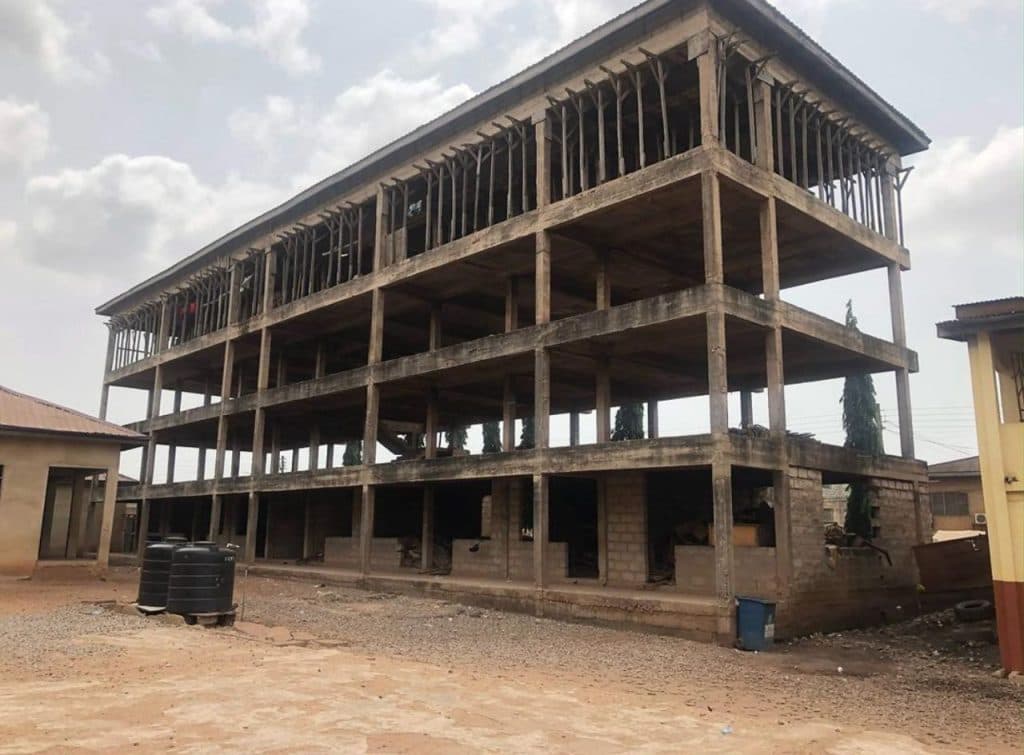
In the heart of Accra Newtown, the tragic collapse of a school building, which trapped innocent worshippers and claimed three precious lives, is a sobering testament to our ever-fading sense of responsibility. This was no natural disaster nor an act of divine intervention, it was entirely avoidable. The structure, as many eyewitnesses noted, was visibly hazardous. Yet, it stood defiantly until tragedy struck. What is most haunting about this event is not just the loss of life but the glaring reality that lies exposed, Ghana is slipping into a culture of nonchalance, an ethos of “it doesn’t concern me, so I’ll look away.”
This apathy has infiltrated the very fabric of our society. Every day, we walk past ticking time bombs such like, crumbling buildings, gaping potholes, and skewed electric poles. Instead of addressing them, we have mastered the “fire service” approach, where we only act when the flames are already raging, when lives are lost, when grief blankets our communities. The authorities, predictably, descend on the disaster site, not necessarily to solve the issue but for photo opportunities, political speeches, and directives that at the end, do not go anywhere. At most, forty-eight hours later, the calamity disappears into obscurity, and life carries on as usual.
Why are we like this? Why is there no accountability, no forward-thinking, no policy shifts even when tragedy offers us a glaring lesson? Instead, these incidents often spiral into political blame games, to wit, who failed, which administration should shoulder the guilt, while the root causes remain lodged, untouched and exacerbated. This systematic failure begs the question: who really cares?
To fully grasp this malaise, we must look beyond the tragedy at Accra Newtown into our everyday experiences. Our society is awash in small but persistent acts of carelessness born from the same toxic indifference.
Take our roads, for instance. Everybody who plies Accra-Nsawam road knows the morning chaos at Pokuase or the gridlock at Naa Desua Plaza (Achimota Overhead) and Old Station Bus stops at Achimota. Trotro drivers, with impunity, convert busy highways into parking lots. Bus stops, planned to streamline traffic are ignored entirely. Drivers stop wherever and whenever they please to pick up passengers. Reducing the road that supposed to be a three lane, into just one. Just imagine the volume of cars coming from that direction to Accra. And the commuters? They condone it. They stand at where they please, perpetuating the dysfunction because “it’s convenient” for them.
Meanwhile, law enforcement officers, stationed at some of these bus stops, are reduced to mere spectators as public indiscipline envelopes their surroundings. Why do these officers seem powerless? Their instructions are either ignored or met with resistance from the drivers backed by some citizens.
And it doesn’t stop there. Drivers knowingly overload their vehicles, sometimes cramming passengers to the point of discomfort. The passengers don’t object because their only priority is getting to their destination, no matter how inconvenient or unsafe. Why do commuters comply with chaos instead of order? It’s because, at the root of it all, no one cares unless the problem directly disrupts their lives.
This negligence is often wrapped in an all-too-familiar justification: poverty and unemployment. It’s easy to rationalize indiscipline as the result of economic hardship, but when the very life of a society becomes synonymous with disorder and refusal to follow laws, the cost escalates daily.
Unemployment and poverty have become ready-made excuses to justify behaviors that have long-term consequences. For instance, the Trotros (Commercial Mini Buses) that clog our roads, causing unimaginable traffic, do so not because there’s no alternative. No, most of them operate in absolute disregard for the system because those involved feel empowered by impunity. Despite the availability of bus stops, trotro drivers and some privately-owned vehicle operators see no consequence in stopping wherever they wish, a selfish act that derails the commuting experience of hundreds daily. What’s worse is the passive complicity of our leaders, who endure the same inconvenience in their tinted SUVs but never address the root causes.
We have become an indisciplined society blinded by instant gratification. Look closer, and you’ll see how dangerously this has become entrenched. From hawkers who dash across speeding highways hoping for last-minute sales to buildings that disregard construction codes, it’s as though the rules don’t matter anymore. Accountability is absent because for the majority, “as long as it benefits me” trumps any ethical considerations to the contrary.
This dangerous cocktail of apathy, selfishness, and indiscipline is why potential disasters like the Accra Newtown school collapse always loom. Just as the frail and weak structure was visible to the many people who passed by, much of our country’s impending crises are staring us in the face. Yet, unless or until disaster strikes, we shrug our shoulders and carry on.
We cannot keep blaming everything on systemic inadequacies while also perpetuating recklessness ourselves. Yes, leadership must do better, but so must everyday Ghanaians. The school collapse in Accra Newtown wasn’t just indicative of inadequate enforcement by city planning authorities. It was also a reflection of the passivity of residents who noticed something alarming but did nothing about it.
This attitude seeps into every facet of our existence, traffic on the Nsawam-Achimota-Accra Road, Adenta-Madina-Accra Road, Kasoa-Weija-Accra Road, the dangerous overload of vehicles, the unnecessary delays are all cycle of “see no evil, hear no evil, and speak no evil.” By the time it becomes unavoidable, the evil has already swallowed lives, destroyed families, and wreaked havoc on public trust.
To reform, Ghanaians must collectively embrace the idea that everything concerns everyone. The ripple effects of today’s negligence could hit us tomorrow. If the authorities won’t act immediately, why can’t citizens take up this mantle.
Similarly, leaders must abandon the reactionary tendencies that have painted every crisis as “just another news cycle.” We need accountability measures, proactive policies, and aggressive enforcement to prevent looming disasters.
The School building collapse at Accra Newtown and society’s broader culture of indiscipline is Ghana’s loud wake-up call, reverberating from within crumbling infrastructures and stagnant traffic jams. But will we wake up? The initial outrage has a predictable shelf life before it fades into silence. Yet, the time to act is now, to ensure accountability, to redefine what it means to live in a disciplined society.
It’s not just a matter of leadership but of collective responsibility. The real question isn’t, “who is to blame?” but “do we as a society care enough to prevent these tragedies?” If we don’t answer that urgently, the dangers we oversee daily will eventually oversee us. Let’s act before the next collapse, whether structural or societal comes crashing down.
The Writer is an apoplectic Ghanaian who is tired of the ‘system’
source: Bright Yao Dzakah