Government is moving to integrate scientifically validated traditional medicine into Ghana’s mainstream healthcare system, with Deputy Minister for Health Prof. Dr. Grace Ayensu-Danquah saying the sector could play a bigger role in improving access to quality healthcare.
Prof. Ayensu-Danquah said Ghana must explore ways to bring traditional and conventional medicine together safely and on the basis of scientific evidence, drawing lessons from countries such as China, where the two systems complement each other.
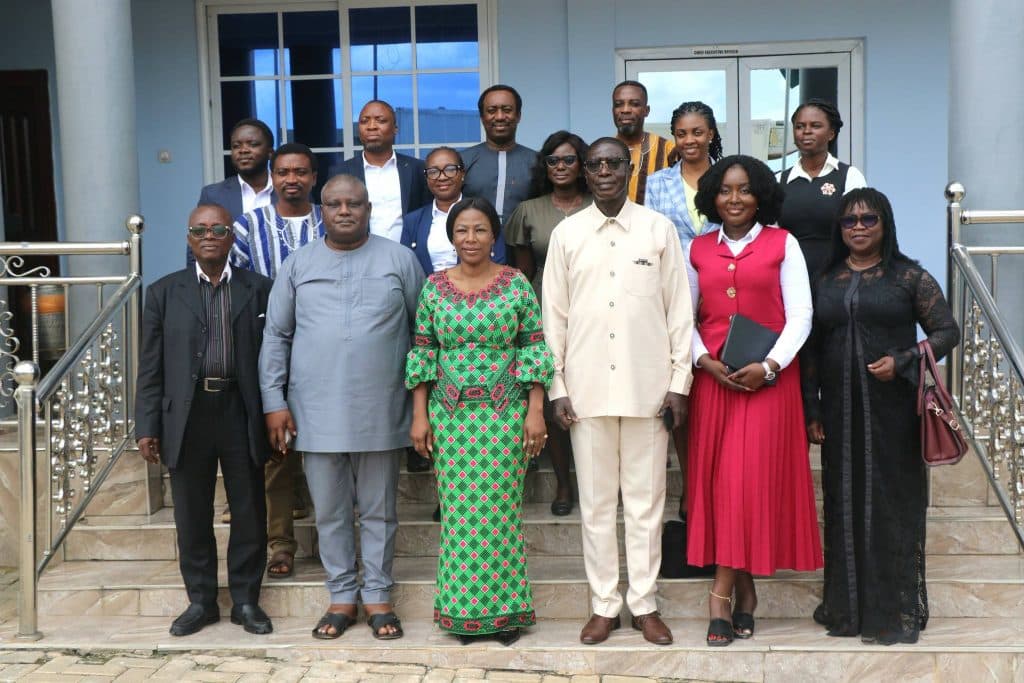
She made the remarks when she visited the Center of Awareness (COA) Research and Manufacturing Company, a herbal medicine manufacturing facility in the Central Region, where she met management and staff and inspected the facility to assess its compliance with Good Manufacturing Practices (GMPs).
According to the Deputy Minister, the government’s Free Primary Healthcare programme, which places emphasis on preventive and promotive healthcare, presents an opportunity to examine how traditional medicine can contribute to national healthcare delivery.
She particularly identified non-communicable diseases such as hypertension and diabetes as areas where scientifically validated traditional medicine could potentially contribute to prevention and treatment.
“Traditional medicine has an important role to play in improving healthcare delivery,” Prof. Ayensu-Danquah said, stressing the need for its integration to be guided by research, quality assurance and proper regulation.
She said the Ministry of Health would continue working with relevant stakeholders to strengthen research, quality assurance, manufacturing and regulation within the traditional medicine sector.
The objective, she added, is to ensure that traditional and conventional medicine can work alongside each other without compromising patient safety or the quality of healthcare.
Chief Executive Officer of COA Manufacturing Company, Prof. (HC) Samuel Ato Duncan, welcomed the government’s efforts to develop traditional medicine to standards that would allow it to complement national healthcare programmes, particularly the Free Primary Healthcare initiative.
He said COA was also undertaking research into the potential health benefits of its products, including research relating to cancer and viral diseases.
Prof. Duncan said sustained research and collaboration between traditional medicine practitioners, manufacturers and government would be critical to unlocking the sector’s potential and enabling it to make a greater contribution to Ghana’s healthcare system.
Prof. Ayensu-Danquah’s visit formed part of efforts to assess and strengthen the capacity of local herbal medicine manufacturers while advancing the government’s broader push for a healthcare system in which traditional medicine, where scientifically validated and properly regulated, can complement conventional medical care.