The Parliamentary Select Committee on Education has raised concerns over staffing shortages, payroll irregularities, and delayed payments to suppliers at several tertiary institutions following a three-day oversight exercise.
The committee said the issues came to light during its engagement with universities, technical universities, and professional institutions over concerns contained in the Auditor General’s Reports for the 2024 and 2025 financial years.
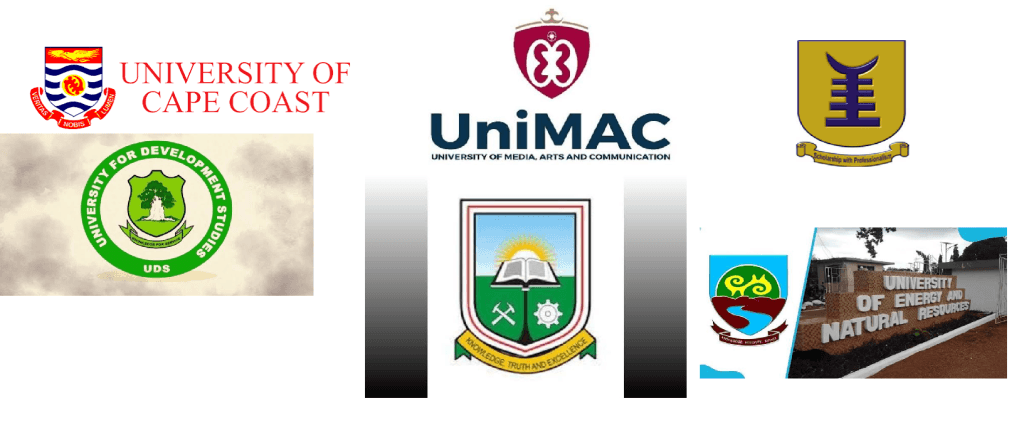
Institutions visited included the University of Cape Coast (UCC), University for Development Studies (UDS), University of Energy and Natural Resources (UENR), University of Business and Integrated Development Studies (UBIDS), University of Technology and Applied Sciences (UTAS), University of Media, Arts and Communications (UniMAC), University of Professional Studies, Accra (UPSA), University of Mines and Technology (UMaT), Ho Technical University (HTU), Dr Hilla Limann Technical University (DHLTU) and Tamale Technical University (TaTU).
The Institute of Chartered Accountants, Ghana and the Chartered Institute of Bankers were also part of the exercise.
Among the concerns discussed were inadequate staffing at information technology directorates, delays in settling suppliers, irregularities on payroll and the underpayment of motorcycle maintenance and utility allowances.
The committee, led by its chairman, Peter Nortsu-Kotoe Kwasi, said the oversight exercise was intended to help ensure that the concerns identified by the Auditor General were properly addressed rather than left unresolved.
It said it would continue to monitor the implementation of recommendations arising from the engagements and hold the institutions accountable for addressing the identified irregularities.
The committee also stressed the need for public institutions to improve financial management and ensure that state resources are used efficiently and for their intended purposes.
The exercise forms part of Parliament’s oversight responsibility to examine how public institutions respond to audit findings and to ensure that recommendations contained in the Auditor General’s reports lead to concrete action.