
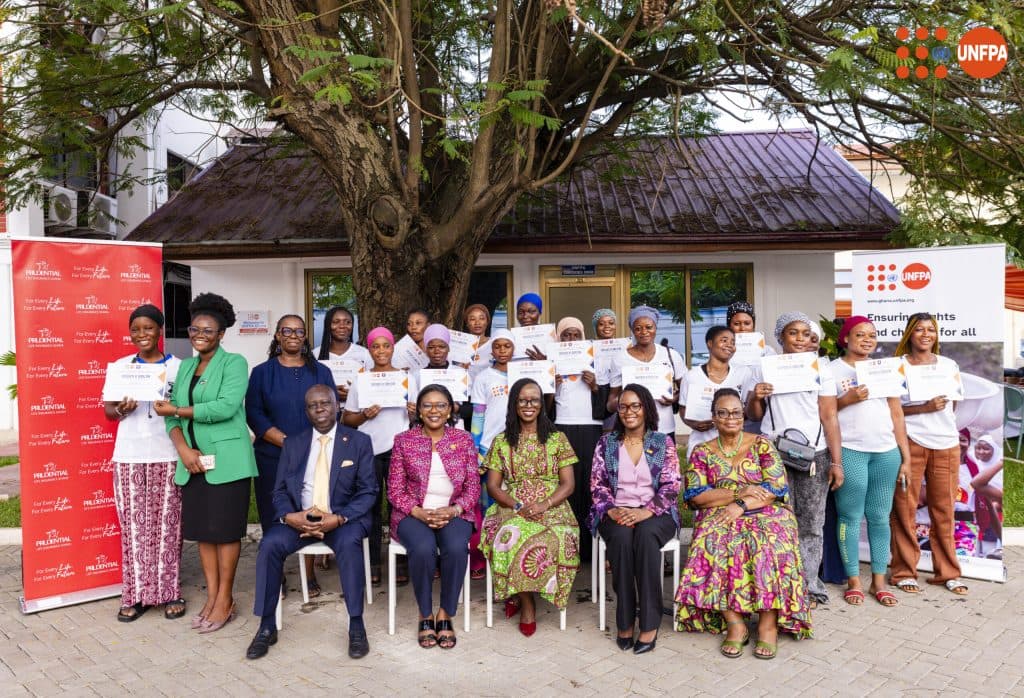
Twenty-five adolescent girls under the Kayayie Assistance Project by UNFPA have graduated from a year-long skills development programme aimed at empowering vulnerable head porters with sustainable livelihoods and life skills.
The initiative, spearheaded by the United Nations Population Fund in partnership, Prudential Life Insurance, among others seeks to reduce the risks of poverty, sexual exploitation, and gender-based violence among young female head porters.
The graduates received training in trades including tiling, painting, and waste recycling and upcycling—occupations traditionally dominated by men—while also benefiting from lessons in sexual and reproductive health, HIV prevention, gender-based violence awareness, and personal safety.
Speaking at the graduation ceremony, UNFPA Country Representative, Dr. Wilfred Ochan, described the programme as a transformative intervention that combines livelihood and life skills to help young women transition from life on the streets to dignified employment.
“Today’s graduation signals a significant shift in the way Kayaye girls are being supported. Beyond livelihood skills, we’ve equipped them with life skills to protect themselves from exploitation, unintended pregnancies, HIV and other vulnerabilities while creating opportunities for decent employment.”
The Country Director revealed that although 25 beneficiaries graduated in this cohort, more than 2,000 Kayaye girls have been trained through the programme over the years.
He explained that UNFPA is monitoring the graduates’ progress to assess improvements in income levels, business creation, and their ability to protect themselves against sexual exploitation and other health risks.
According to him, lessons from the project will be used to develop a national framework for supporting vulnerable girls through integrated skills development.
“Our intention is to package these lessons and work with government and development partners to scale the programme nationwide, integrate it into complementary education and TVET certification, and develop policies that address both the causes and vulnerabilities associated with the Kayaye phenomenon.”
UNFPA also commended its partners for their continued support in expanding opportunities for vulnerable girls and reaffirmed its commitment to creating pathways to economic independence and a safer future for adolescent girls across Ghana.