
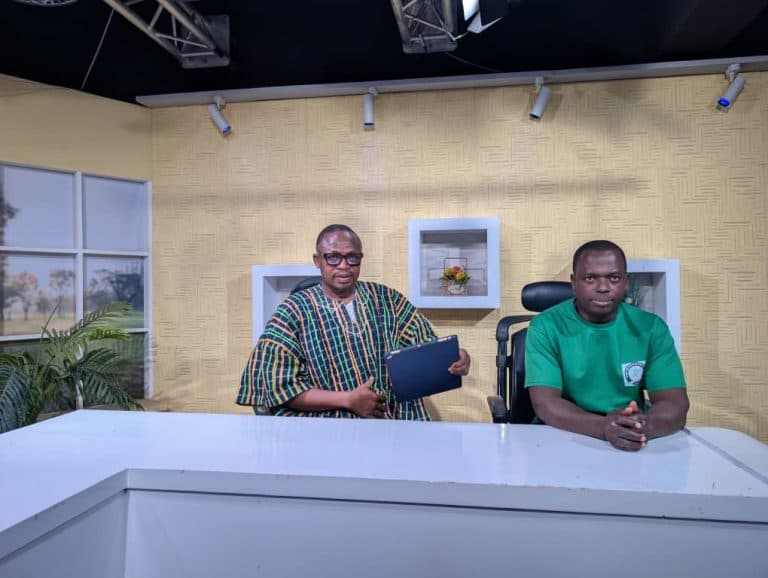
The National Association of Unit Committee Members is calling for greater involvement of local representatives in efforts to tackle sanitation and flooding across Ghana.
The group says unit committee members, assembly members and other community-level leaders must be properly equipped to identify problems in their areas and work with local authorities to address them.
Appearing on Good Afternoon Ghana on Metro TV on Wednesday, September 16, 2026, Convenor of the National Association of Unit Committee Members, Israel Agbomadzi, said the challenges facing many communities cannot be solved solely through interventions from central government.
He argued that local representatives are better placed to identify problems at the community level and mobilise residents to address them.
“Before we can solve the sanitation issue, there must be a collaboration with the assembly members and unit committee members at the local level. With the opinion leaders, the religious body, institutions, everybody must be concerned, much concerned about the sanitation,” he said.
According to him, the association is proposing a number of community-based measures, including waste separation, improved waste collection and the deployment of waste collection vehicles in every electoral area.
He said communities should have designated containers for different categories of waste, including plastics and food waste.
“We need to get where we put plastics, the waste food can be given to animals or our farms,” he said.
Mr Agbomadzi also proposed the use of waste collection tricycles, commonly known as Aboboyaa, to improve waste collection within electoral areas.
He believes such a system could also create jobs and generate revenue for communities.
He further called for drains to be dredged regularly and for trees to be planted along waterways, with appropriate measures taken to prevent waste from entering the drains.
Unit committees
General Secretary of the Ghana Association of Assembly Members, Rev. Augustine Karbo, said unit committee members occupy an important position in Ghana’s local governance system but often lack the training and support required to perform their duties effectively.
He explained that unit committee members are expected to identify challenges within their communities and channel them through the assembly structure for action.
“Their role is to collate challenges at the community level, residential level, like we are going to talk about sanitation, waste, and water view. Then forward it to the assembly member, to the district where they are located,” he said.
Rev. Karbo said inadequate understanding of the mandate of unit committee members has created a gap between communities and the assemblies.
“The foundation of our democracy is at the community level. Because if you ignore the foundation, you cannot expect the national superstructure to stand firm. And we need to have a second look at our local governance system in the country,” he stated.
He called for regular education, training and capacity building for unit committee members to enable them to understand their responsibilities and engage effectively with local authorities.
Sanitation and flooding
The two representatives also blamed Ghana’s sanitation and flooding problems on a combination of human behaviour and weaknesses in local infrastructure.
Rev. Karbo said some residents dispose of household waste in drains and waterways, worsening flooding whenever it rains.
He also raised concerns about the design and capacity of some drainage systems, arguing that poorly constructed or shallow drains can prevent water from flowing freely.
“Time to time cleanup is not enough. We need a collaborative effort,” he said.
“Residents, church members, traditional rulers, all of us working together to ensure that our community are safe. Properties are safe, lives are safe. That is the way to go.”
He said communities must take preventive measures before the rainy season rather than waiting for floods to occur before responding.
National dialogue
The association is also preparing for a national dialogue on local governance and community development, with discussions expected to focus on sanitation, flooding and the role of local actors.
Mr Agbomadzi said the group has already engaged officials in the Greater Accra Region and plans to submit another document to the new Minister of Local Government following a change in leadership at the ministry.
He said the outcome of the national dialogue will also be presented to Parliament and other stakeholders.
Rev. Karbo said the intention is to make the dialogue the beginning of a longer engagement rather than a one-time event.
“The vision of the dialogue is a collaborative effort. All stakeholders must come on board, from the MMDAs to religious bodies, traditional businesses, institutions located within these enclaves must all come on board because it is a community development issue,” he said.
He added that the association wants practical solutions to emerge from the discussions.
The group is urging assembly members, unit committee members, traditional leaders, religious organisations, businesses, civil society groups and other stakeholders to participate in the process.