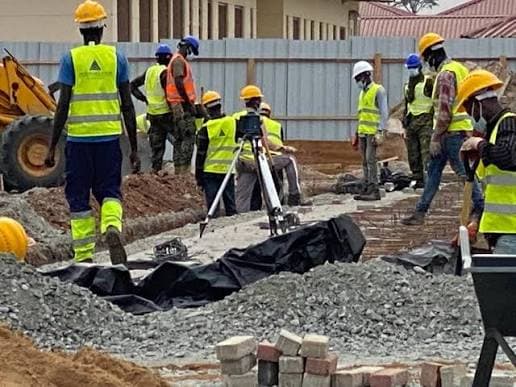
The cost of unskilled labour in Ghana’s construction sector fell by 5.7% year-on-year in September 2026, according to the Ghana Statistical Service (GSS).
The decline was more pronounced than the 1.7% reduction recorded for skilled labour during the same period.
Overall, construction labour inflation fell by 3.2% in September 2026 compared to September 2025, deepening from the 2.9% decline recorded in August.
The latest figures form part of the September 2026 Prime Building Cost Index (PBCI) released by the GSS.
Labour accounts for 19.5% of the PBCI basket and recorded a negative contribution of 12.3% to the overall building inflation rate.
The decline in labour costs therefore helped to offset some of the pressure from other components of construction.
Materials, which account for 76.5% of the basket, recorded inflation of 6.5% year-on-year, while plant and equipment costs rose sharply by 19.1%.
The GSS said skilled and unskilled labour became cheaper than a year earlier, in contrast to the rise in machinery-related costs.
Small tools recorded a 24.8% year-on-year increase, while equipment costs rose by 11.8%.
Despite the decline in labour costs, overall building inflation increased to 5.1% in September from 4.6% in August.
Building costs were also 5.1% higher than they were in September 2025.
The GSS said building inflation remains low overall, but plant, tools and selected installation materials are emerging as the main pressure points.