
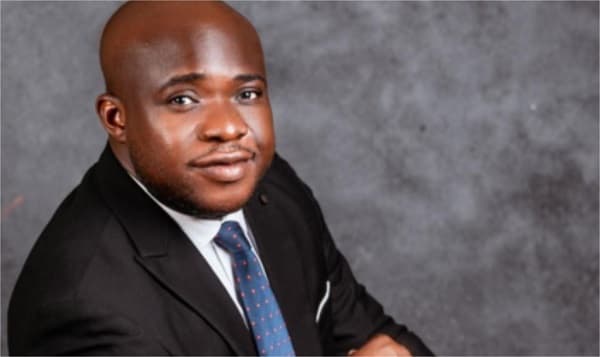
The Chief Executive Officer of the Venture Capital Trust Fund (VCTF), Michael Abbey, says the lack of a sustainable funding source remains one of the biggest challenges confronting the fund.
Speaking in an interview on Good Afternoon Ghana on Metro TV, Michael Abbey explained that the original financing structure of the fund was disrupted shortly after its establishment.
“When you take our enabling law… it was put in the law that we get about 25% of the proceeds from the then National Reconstruction Levy… but as I speak with you, two years after we got established, the levy got repealed, and there was no successor levy,” he said.
According to him, this has left the fund largely dependent on government budgetary support, with recent relief coming from the World Bank under the Ghana Economic Transformation Project.
He noted that venture capital investments take years to mature, making consistent funding critical.
“You invest into a fund, it takes between three, five, at most even 10 years to exit… what we need at this stage is… liquidity coming in,” he said.
Mr Abbey disclosed that funds received under the World Bank-supported programme have largely been committed to investments, leaving the Trust Fund seeking new sources of financing.
“We’ve more or less exhausted the funds… and the investments are ongoing and doing very well… but a major challenge has been the absence of a sustainable funding stream,” he added.
The VCTF CEO also pointed out that the legal framework governing the fund needs updating.
“The Act… is two decades old… there’s a need for a revision… and we are in the process of doing the same,” he said.
Beyond funding constraints, Mr Abbey raised concerns about the mindset of some small and medium enterprises seeking support.
He said many business owners are hesitant to embrace equity financing due to fears of losing control.
“There is always that pushback to opening up oneself, to inviting others to come into the business in a partnership form,” he noted.
Explaining the concept, he said equity financing requires business owners to share decision-making power in exchange for investment.
“Whoever would want to inject liquidity into your business would equally want to ensure that we do the proper things… financial reporting, systems in place,” he said.
Mr Abbey urged entrepreneurs to see partnerships as a path to growth rather than a threat.
“You succeed to the extent of your partnership… the transformative power… of partnership is key,” he said.
On concerns about transparency, Mr Abbey said the fund has strict processes before committing public funds.
He explained that applications go through legal, financial and operational checks, sometimes taking up to a year.
“There’s a whole due diligence that we do… usually six to 12 months,” he said.
He added that an independent investment committee provides an additional layer of scrutiny.
The VCTF is also positioning itself to support the government’s proposed 24-hour economy policy.
Mr Abbey said the fund has signed a memorandum of understanding with the secretariat and is working to raise a GH¢200 million SME fund.
“We are seeking to raise a 200 million Ghana cedi fund… to support businesses that are willing to operate 24-7,” he said.
He indicated that discussions are ongoing with pension funds and other investors to mobilise capital.
Looking ahead, the VCTF plans to deepen its role in supporting entrepreneurship through targeted funds, including one linked to the government’s innovation programmes.
Mr Abbey said the goal is to identify promising businesses and help them scale.
“Any of them show promise… then the fund… will now be deployed to help them to grow and scale,” he said.
He added that partnerships within the investment ecosystem will be key to expanding the fund’s impact in the coming years.



