
‘
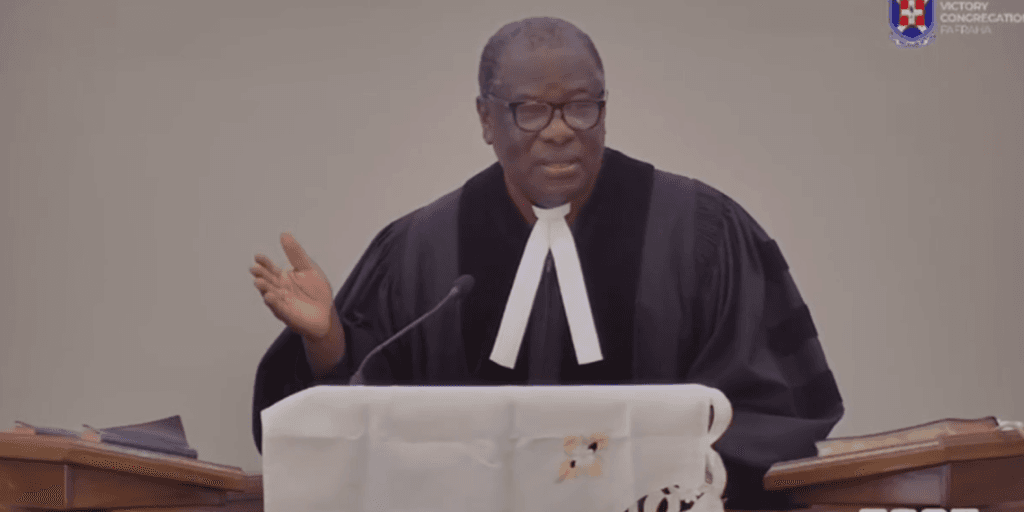
Former Moderator of the General Assembly of the Presbyterian Church of Ghana, Reverend Professor Joseph Obiri Yeboah Mante, has spoken out against the recent threats made by the CEO of the Ghana Free Zones Authority, Dr. Mavis Awusi, towards the Chairman of the Church of Pentecost, Apostle Eric Nyamekye.
This comes after Apostle Nyamekye raised concerns about the devastating environmental impacts of illegal mining, commonly referred to as galamsey, which he claims is affecting religious practices such as baptisms.
The issue began when Apostle Nyamekye addressed the problem of galamsey during the Church of Pentecost’s General Council Meeting. His remarks drew attention to the severe pollution of rivers and streams, which has led many congregations to abandon natural water bodies for synthetic baptism pools. His call for immediate action on the environmental damage resonated with many Ghanaians concerned about the long-term consequences of illegal mining on the country’s natural resources.
However, Dr. Mavis Awusi responded to the concerns raised by Nyamekye with a sharp warning. In a public interview, she claimed that the church leader would be “dealt with” if he continued his outspoken advocacy against galamsey. This statement has ignited a wave of public backlash, with many accusing Dr. Awusi of overstepping her boundaries and threatening religious freedoms.
In a bold response, Rev. Mante, known for his principled stance on national issues, expressed his support for Apostle Nyamekye and condemned Dr. Awusi’s remarks. Speaking on Sunday, April 26, 2026, Rev. Mante emphasized that religious leaders should not be intimidated when speaking out on important national issues. He made it clear that neither political power nor threats could silence them.
Referring to the situation, Rev. Mante remarked, “Tell that woman we are not afraid of her. It’s not about party. We are not afraid of anybody.” His comment echoed similar sentiments made by Pope Francis, who once said, “If something is a sin, it is a sin, whether it is under Nana Addo Dankwa Akufo-Addo or John Dramani Mahama or whoever.” This comparison reinforced the idea that moral and ethical stances transcend political boundaries.



