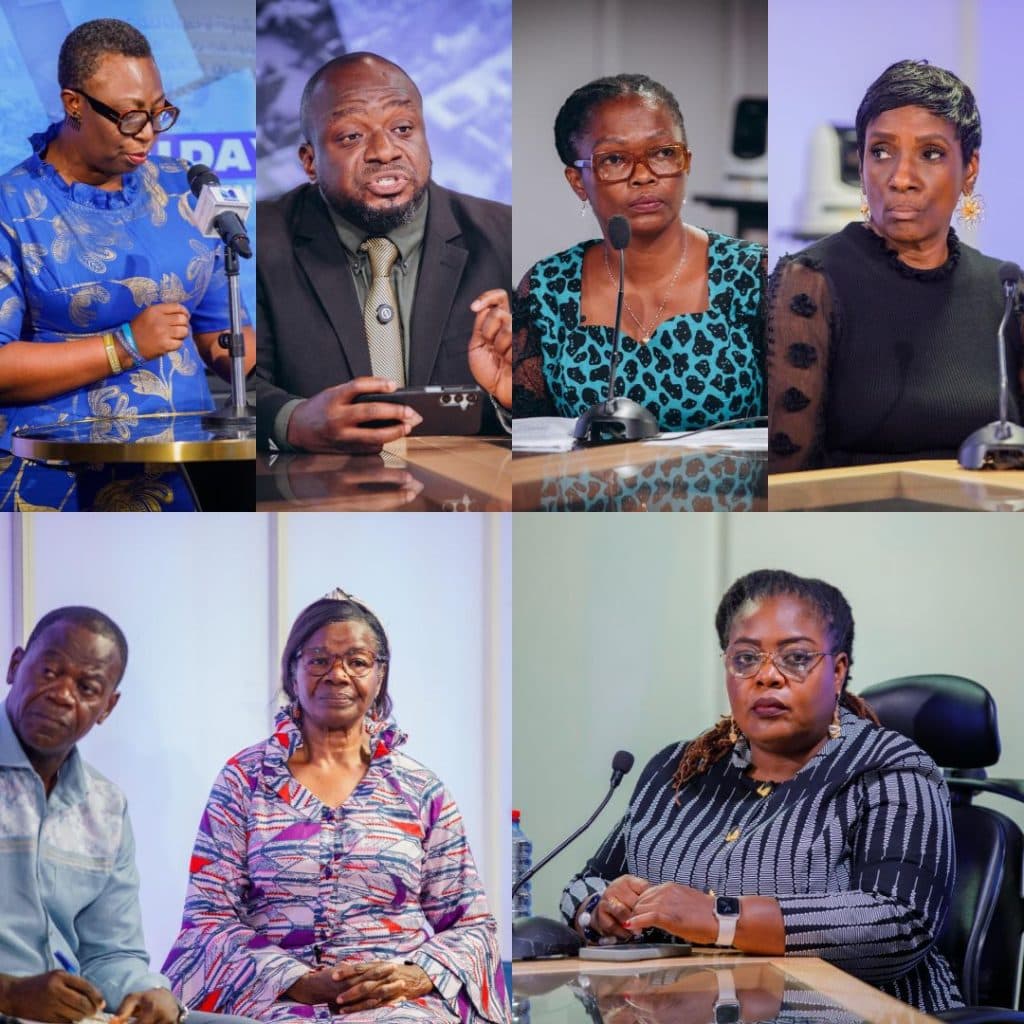
As Africa marked this year’s AU Day, a gathering of sanitation stakeholders in Accra did not hold back. The verdict? Ghana is far from where it needs to be on water and sanitation, and the clock is ticking.
The mini-conference, organised by Metro TV brought together government officials, private waste operators, development experts, and even schoolchildren to confront a theme that cuts straight to the continent’s Agenda 2063: ensuring sustainable water availability and safe sanitation systems.
And the picture, by all accounts, is troubling.
Yaw Atta Arhin, a WASH technical specialist with World Vision International, laid out the numbers with little sugar-coating.
“In 1990, Ghana’s open defecation rate was 22%,” he told the room. “In 2026, it is 18%. So for 36 years, we have only made 4% improvement.”
The data got bleaker. Twenty-six per cent of public basic schools have no toilet facility at all. Only 25.3% of Ghanaians have access to improved sanitation. And while the national access to drinking water stands at nearly 88%, Yaw Atta Arhin warned that the devil is in the details.
“At any point in time, about 30% of all water facilities would have broken down, especially in rural and small-town communities,” he said.
The cost of all this? The World Bank estimated back in 2012 that Ghana loses more than $290 million annually due to poor sanitation, plus another $79 million from open defecation alone.
“That is $369 million gone to waste,” Atta Arhin said. “You know what that amount can do for our economy?”
If there was one message that echoed through the morning, it was this: Ghana has good policies. Implementation is the problem.
Emma Adwoa Appiah Osei-Duah, Director of Communications and Corporate Affairs at Zoomlion Ghana Limited, did not mince words.
“We should also decide to stop bringing in people to apologise for offenders,” she said. “If you offend, you have offended. Let the law bite you hard.”
She pointed to Rwanda as an example of a country that turned its sanitation fortunes around through firm enforcement.
“It was not comfortable until you accept the hard truth and decide to let the people feel a little pinch for irresponsibility,” she said. “We are going nowhere without that.”
Cassandra Willis, Director of Partnerships and International Collaborations at Southsm Shore University (formerly Union University College), has been living in Ghana long enough to observe what she calls a “victim mentality.”
“Most people think someone else is supposed to handle these things for them,” she said. “No. We’re supposed to come together as a community, collaborate, strategise, come up with ideas and ways to generate funds to help save our communities.”
Willis, who also runs a Facebook blog called ‘Change of Mind Change of Life’, said the trash problem in particular is holding Ghana back from attracting investment.
“For people to come here and want to invest in this community, it’s kind of what we say in the States – it’s embarrassing,” she said. “You want people to invest in you, but you don’t do anything to show them that it is worth investing in your community.”
Her prescription? “No one owes you anything. Unless you decide you want a better life, you will constantly be looking for someone else to save you.”
The private waste operators, who do the actual heavy lifting of collecting and processing the country’s waste, had their own frustrations.
Ama Ofori Antwi, Executive Secretary of the Environmental Service Providers Association (ESPA), said the lack of a supportive framework is driving investors away.
“If I have money and you want me to invest in the sanitation sector, I wouldn’t,” she said candidly. “I can use the same amount to buy a cheaper truck, go into sand business, and get three times the profit.”
She said government has paid some arrears following a threatened strike, but more needs to be done.
“In Greater Kumasi, as we speak, the landfill is full and overflowing,” she added. “There is a huge recycling plant there called K-Cup. They have worked and not been paid for over two years.”
Zoomlion’s Emma Adwoa Appiah Osei-Duah confirmed the payment struggles.
“If the contractors are resolved to do their work, then government should also prioritise the payment,” she said. “It shouldn’t be like we meet and discuss, pay for a while, and then hold on.”
Deputy Minister for Local Government, Chief Tenancy and Religious Affairs, Rita Naa Odoley Sowah, had to leave early for other engagements, but not before issuing a direct order.
She called out a specific development along a storm drain at East Legon, near Adentan.
“There is a development going on along a storm drain close to Adentan,” she said. “The stop work sign is in the corner there, nobody sees it. Ensure that you go there and stop work. They do not have permits.”
The Minister, who is also the MP for La Dade Kotopon, said President John Dramani Mahama has made sanitation a key performance indicator for MMDCEs. She wants it extended to regional ministers as well.
Not everyone at the table was from government or industry. Elder Albert Narh, representing the Christian community, said the Church of Pentecost has made environmental sanitation a deliberate part of its five-year strategic plan.
“Since 2023, once in the month of March, a lot of dedication is given to environmental discussions, even on the pulpit,” he said.
Sophia Kudjordji, Chief Corporate Communications Officer for the Jospong Group, added that the Church of Pentecost alone has about two million members across Ghana.
“If we can get other churches to join, then it means we are being deliberate about talking about environmental sanitation,” she said. “Not just waste management, but galamsey, tree planting, everything.”
In the midst of all the grown-up frustration, a group of children from God’s Glory School Complex at Pokuase took the stage. They delivered a crisp recitation about the African Union: its 55 member countries, its headquarters in Addis Ababa, and its motto, “The Africa We Want.”
They were polite. They were well-rehearsed. And they knew more about Agenda 2063 than many adults in the room.
For Atta Arhin , that is exactly where the change must begin.
“Nothing can be more important to child wellbeing than access to safe drinking water and improved sanitation,” he said, quoting World Vision’s own mantra.
But he also sounded a sobering note. Can Ghana achieve the SDG target of universal access to improved sanitation by 2030?
“In my opinion, we cannot,” he said. “We will not be able to. Given where we are, it will be extremely difficult, almost impossible.”
But he added: “If we put our hands on the wheel, if we prioritise it, invest heavily in it, we may get very, very far.”
Towards the end of the nearly four-hour session, the question was put plainly: practically, how do we get this done?
Ata’ahin’s answer was one word.
“Prioritisation,” he said. “If you don’t prioritise, you will not invest. The previous government made NHIS a priority. This government has added Big Push. Once you prioritise, you will finance it.”
Ama Ofori Antwi agreed. “It needs to be prioritised,” she said. “If it is done, the impact cuts across everything. There will be jobs for the youth. Productivity will increase.”
For now, the stakeholders left with a shared list of demands: enforce the bylaws, pay private operators on time, end the culture of pleading for offenders, and treat sanitation as the emergency it is.
And as the children from God’s Glory School Complex reminded everyone before they filed out: the Africa they want is not the one they have been given.
It is the one they will have to build themselves.