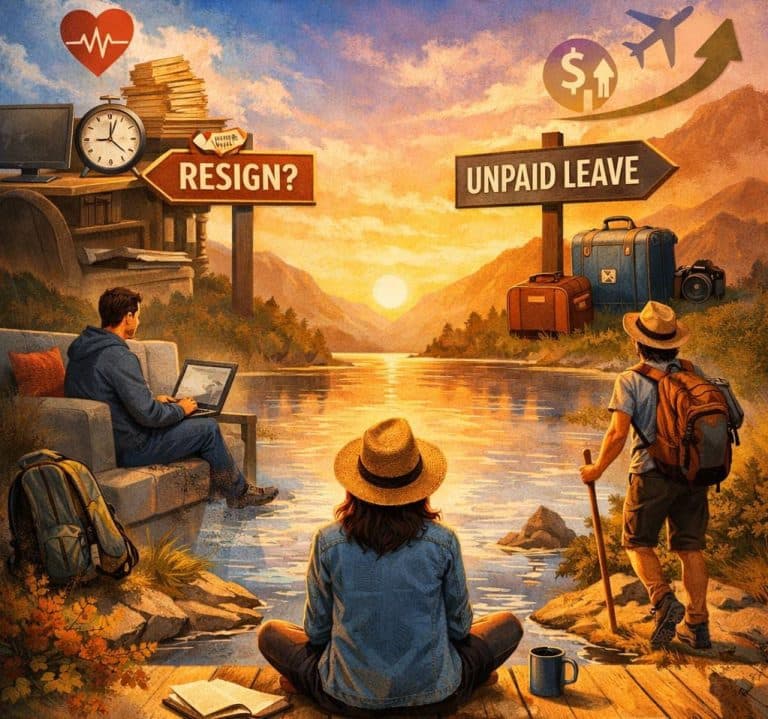
In a work culture once defined by the dramatic “I quit,” a quieter shift is unfolding. Increasingly, employees are stepping away from their jobs – not permanently, but temporarily. Unpaid leave, once seen as a last resort, is now becoming a deliberate lifestyle choice.
So why are people pressing pause instead of walking away altogether?
The Rise of the “Soft Exit”
Resignation used to symbolize a clean break – burnout, dissatisfaction, or a better opportunity elsewhere. But today’s workforce is redefining that narrative. Instead of cutting ties, many are opting for what could be called a soft exit: taking unpaid leave to reset without losing job security.
It’s less risky, more flexible, and, for many, a smarter way to navigate uncertainty.
Burnout Without the Fallout
Let’s be honest – burnout is everywhere. Long hours, blurred work-life boundaries, and constant digital connectivity have left many workers mentally drained. But quitting outright comes with financial pressure, job market anxiety, and the stress of starting over.
Unpaid leave offers a middle ground:
- Time to rest without fully disrupting income potential long-term
- Space to recover mental and emotional health
- A chance to return refreshed rather than resentful
It’s recovery without the consequences of a total career reset.
Economic Reality: Playing It Safe
In uncertain economic times, job security is gold. Even those unhappy at work may hesitate to resign without a guaranteed alternative.
Unpaid leave becomes a strategic move:
- You keep your role (or at least the possibility of returning)
- You avoid the risks of unemployment
- You buy time to plan your next step carefully
It’s not indecision – it’s calculated patience.
The Search for Meaning, Not Just Money
Today’s professionals are asking deeper questions:
Is this job fulfilling? Is this the life I want?
Unpaid leave allows people to explore those questions without pressure. Some use the time to:
- Travel or reconnect with family
- Pursue passion projects or side hustles
- Learn new skills or rethink career paths
It reflects a shift from survival-driven work to purpose-driven living.
Workplace Culture Is (Slowly) Adapting
Employers, too, are beginning to recognize the value of flexibility. Retaining an experienced employee – even temporarily absent – can be more cost-effective than replacing them entirely.
Some organizations now see unpaid leave as:
- A retention tool
- A mental health support mechanism
- A way to build long-term loyalty
In a competitive talent market, flexibility is no longer a perk – it’s a strategy.
The Psychology of “Not Letting Go”
There’s also a human element at play. Work isn’t just about income – it’s identity, routine, and belonging. Quitting can feel like losing a part of oneself.
Unpaid leave softens that emotional break:
- You’re not starting from zero
- You maintain professional identity
- You leave the door open
It’s easier to step away when you know you can return.
A Cultural Shift in How We See Work
Ultimately, the rise of unpaid leave reflects something bigger: a redefinition of success.
People are no longer willing to sacrifice well-being for stability – but they’re also not ready to abandon stability entirely. Instead, they’re negotiating a new balance.
Work is no longer a rigid structure – it’s becoming something people shape around their lives, not the other way around.
At the end of the day, choosing unpaid leave isn’t about running away from work it’s about taking control. It’s people recognizing when they need a break, giving themselves permission to pause, and figuring things out without closing doors behind them. It shows a quiet kind of courage the kind that says, “I need time, and that’s okay.”