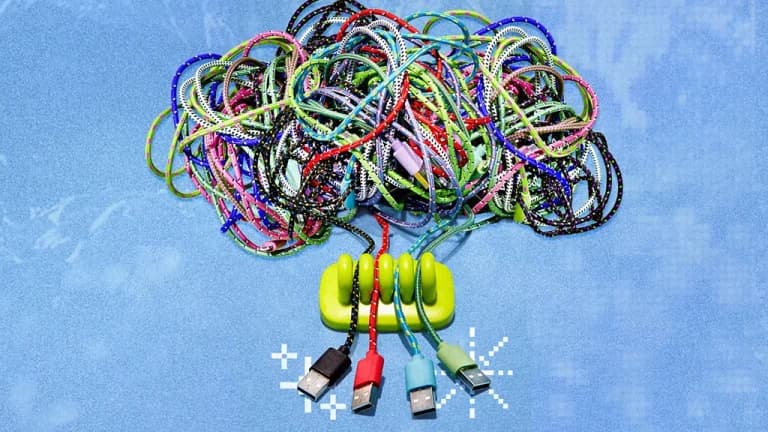
Charging cables are one of the most ignored pieces of technology we use every day — until they stop working and leave us with a dead phone. Most people think cables break because they are wrapped the wrong way, but experts say that’s not true.
Michael Pecht, founder of the Center for Advanced Life Cycle Engineering at the University of Maryland, studies why electronic devices fail. His team tests charging cables by bending, stretching, and damaging them to see what causes problems.
He says wrapping your cable the “wrong” way is usually not the issue.
“We’ve never seen cables fail because they were wrapped badly,” Pecht explained.
Many people believe cables should only be wrapped loosely to avoid damage, but experts say the real problem is how we handle the connector — the part where the cable joins the plug.
That area is the weakest point of the cable. Constant bending, pulling, or stretching there can damage the tiny wires inside.
Experts say common habits that damage cables include:
- Pulling the cable instead of the plug when unplugging
- Stretching cables too far to reach a socket
- Using phones while charging and sharply bending the connector
- Resting phones on the cable in car cup holders
Engineers explain that repeated bending weakens the metal inside the cable, similar to bending a paper clip until it snaps.
Kyle Wiens, co-founder of iFixit, says most cable damage happens near the connector.
“If cables break, it’s almost always where the cable meets the plug,” he said.
Experts also recommend buying better-quality cables instead of very cheap ones. Braided cables, which are covered with woven nylon material, are stronger and last longer than standard plastic-covered cables.
Even Apple now uses braided cables in many newer products because they are more durable.
The good news is that taking care of cables is simple:
- Hold the plug when unplugging
- Avoid bending the connector sharply
- Don’t overstretch cables
- Use stronger, high-quality cables
While charging cables may seem small and unimportant, treating them properly can save money and reduce waste over time.