
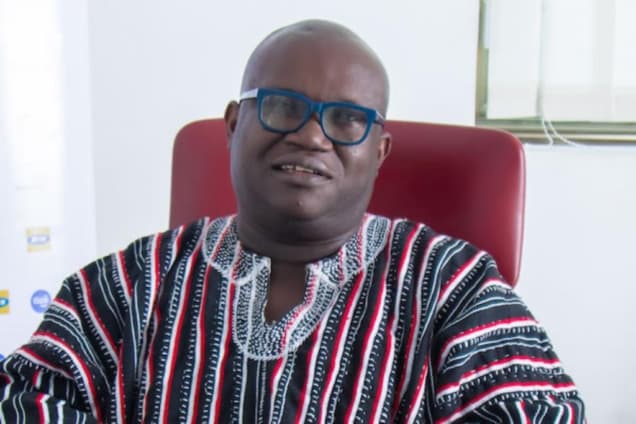
Chief Executive Officer of the Ghana Chamber of Mines, Dr Ken Ashigbey, has welcomed the conviction and sentencing of New Patriotic Party Ashanti Regional Chairman Bernard Antwi-Boasiako, popularly known as Chairman Wontumi, but says the fight against illegal mining must not end there, calling on authorities to pursue other politically exposed persons implicated in galamsey.
Dr Ashigbey, a leading anti-galamsey campaigner, described the High Court’s decision as a significant milestone in Ghana’s battle against illegal mining, while insisting that true justice will only be achieved if the law is applied consistently, regardless of political status or influence.
On Monday, July 20, the Accra High Court found Chairman Wontumi and his company, Akonta Mining Limited, guilty of illegal mining offences linked to the company’s concession at Samreboi in the Western Region.
The court sentenced Chairman Wontumi to 20 years in prison after convicting him on two counts, with the sentences to run concurrently. Akonta Mining was also convicted on separate counts and fined 15,000 penalty units on each count.
Reacting to the ruling, Dr Ashigbey praised the Attorney-General for successfully prosecuting the case and commended the trial judge for what he described as a courageous decision. He also acknowledged the former Minister for Lands and Natural Resources for previously stating publicly that Akonta Mining was involved in illegal mining activities.
While welcoming the judgment, Dr Ashigbey questioned why other influential individuals named in the report by Professor Kwabena Frimpong-Boateng on illegal mining had not yet faced similar legal action.
“So it is great that we’re dealing with one,” he said, before asking what had become of the other politically exposed persons identified in the report.
His remarks reflect growing public calls for authorities to ensure that the prosecution of illegal mining offences is not selective.
The conviction of Chairman Wontumi is widely seen by anti-galamsey campaigners as one of the most significant legal developments in Ghana’s fight against illegal mining. The ruling also sends a strong message that political office, business ownership and influence do not place anyone above the law.
However, campaigners argue that if the conviction remains an isolated case, the government risks winning a legal battle while losing the broader fight for public confidence and accountability.
They maintain that only a sustained, impartial crackdown on all those involved in illegal mining, irrespective of political affiliation or social standing, will demonstrate that Ghana is serious about ending the destruction of its forests and water bodies.
Dr Ashigbey also stressed that illegal mining is not only an environmental offence but a governance challenge, arguing that the practice survives because of networks involving influential actors, including financiers, equipment owners, local politicians, some traditional leaders, security officers, regulators and business interests.
He said while young men often bear the greatest risks by working in dangerous mining pits, those who profit most from the illegal trade are frequently far removed from the sites of destruction.
Story By Martha Seyram Jackson || Metro Digital



