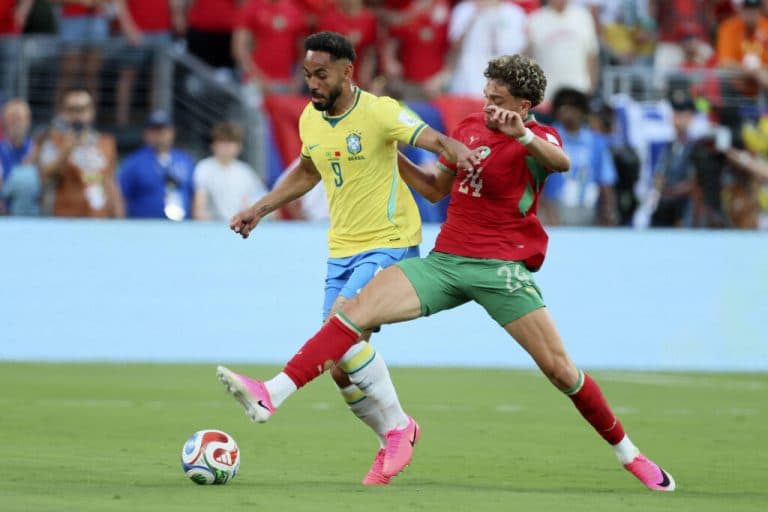
Brazil and Morocco began their FIFA World Cup 2026 campaigns with a hard fought 1-1 draw in Group C at MetLife Stadium in East Rutherford.
Morocco took the lead through Ismael Saibari before Vinícius Júnior struck back for Brazil in an entertaining first half. Despite both sides creating opportunities after the break, neither could find a winner as they settled for a point each in front of a crowd of 80,663.
Morocco made the brighter start and were rewarded midway through the first half. Saibari finished confidently after being picked out by Brahim Díaz, capping a period in which the North Africans looked sharper and more threatening going forward.
Brazil responded positively and drew level 11 minutes later. Bruno Guimarães supplied the pass and Vinícius made no mistake, producing a composed finish to restore parity.
Although Brazil enjoyed slightly more of the ball before the interval, Morocco created the clearer openings and regularly troubled the South American side with quick transitions and intelligent movement between the lines. Brazil were also forced into several defensive interventions, with Casemiro and Roger Ibañez both cautioned as they struggled to contain Morocco’s attacks.
Brazil emerged stronger after half time following tactical adjustments from coach Carlo Ancelotti. The introduction of fresh legs helped the five time world champions gain greater control, and they spent long periods camped inside Morocco’s half.
The pressure increased as Brazil pushed for a second goal, forcing goalkeeper Yassine Bono into a series of important saves. Morocco, however, remained organised and disciplined, absorbing pressure while still posing an occasional threat on the counter attack.
Both managers turned to their benches in search of a breakthrough, but the contest increasingly became a tactical battle. Brazil enjoyed more territory and won several corners, yet Morocco’s defensive structure held firm.
Ten minutes of added time brought late drama as Brazil searched desperately for a winner, but Morocco stood strong to secure a valuable point from a demanding opening fixture.
The statistics reflected the balance of the contest. Brazil finished with a slight advantage in possession and recorded more touches inside the penalty area, while Morocco generated the better quality chances and edged the expected goals figures.
Morocco also performed strongly in individual duels and transitions, frequently advancing into dangerous areas and recovering possession effectively. Brazil dominated aerial contests and carried more sustained attacking pressure, but struggled to consistently break down a well organised Moroccan defence.
In the end, a draw was a fair outcome between two sides who each enjoyed periods of control. Morocco will take confidence from a disciplined and ambitious display, while Brazil will believe there is more to come as the tournament progresses.