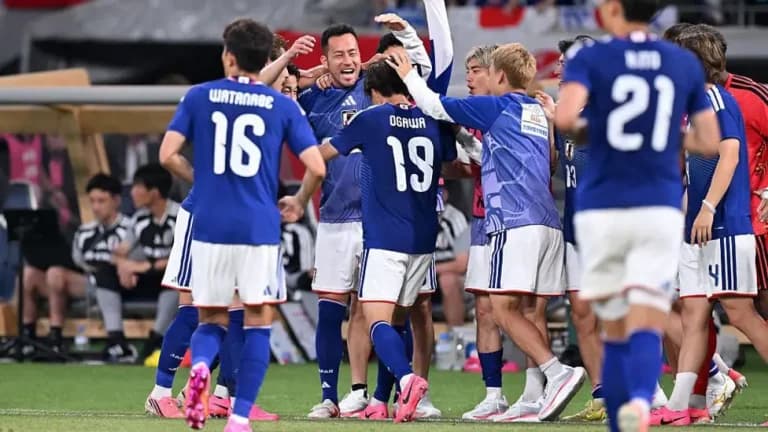
Japan became one of the early beneficiaries of football’s new time-limited substitution rule on Sunday after Iceland were temporarily reduced to 10 men during their friendly clash.
Under new regulations introduced by the International Football Association Board (IFAB) ahead of the World Cup, substituted players now have just 10 seconds to exit the pitch via the nearest point. If they fail to do so, their replacement is not allowed to enter immediately and must wait until the next stoppage in play, leaving their team short-handed.
That is exactly what happened to Iceland when winger Ísak Þorvaldsson was unable to enter the field in time. With Iceland down to 10 players, Japan capitalised, as Kōki Ogawa scored an 87th-minute header to seal a 1-0 victory. The goal came 1 minute and 54 seconds after the substitution delay.
After the match, Japan head coach Hajime Moriyasu urged his team to remain alert to the implications of the new rules, warning that similar lapses could be costly.
“I thought the players handled the new rule adjustments today with almost no issues,” Moriyasu said. “Under the new rules, players won’t necessarily be able to get back on the pitch as quickly as before. That’s something we need to be mindful of.”
He added that teams must avoid creating unnecessary gaps that opponents can exploit during transitions or substitutions.
Moriyasu also highlighted the importance of making the most of the newly introduced three-minute hydration breaks, which allow coaches to deliver brief tactical instructions.
“In those three minutes, we have to organise the key points we need to get across and communicate them clearly,” he explained. “How well we use those three minutes could have a major impact on matches, so we want to prepare thoroughly.”
Japan begin their World Cup campaign against the Netherlands on Sunday, 14 June (21:00 BST), before facing Tunisia and Sweden.
The upcoming World Cup will also feature several other rule changes aimed at reducing time-wasting and improving game flow.
These include a five-second limit on throw-ins and goal kicks, with delays potentially resulting in possession or corners being awarded to the opposition. Players receiving off-field treatment must remain off the pitch for 60 seconds unless exceptions apply, such as for goalkeepers or disciplinary incidents.
Referees will also penalise players who cover their mouths during confrontations, while VAR will now be allowed to quickly check corner decisions and review second yellow cards when assessing red-card incidents.