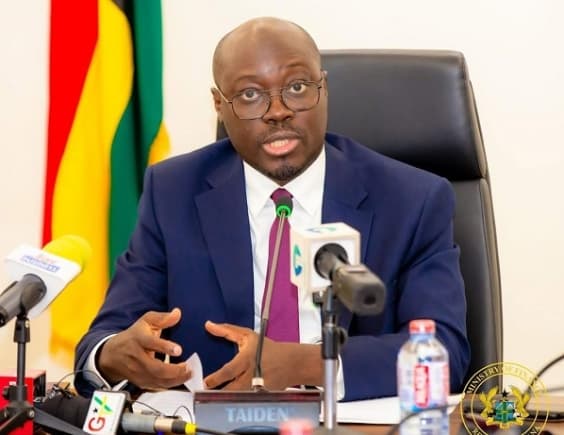
Deputy Minister for Finance Thomas Nyarko Ampem has called on stakeholders to bridge the gap between rice production and consumption in West Africa to reduce the region’s heavy dependence on imports and strengthen food security.
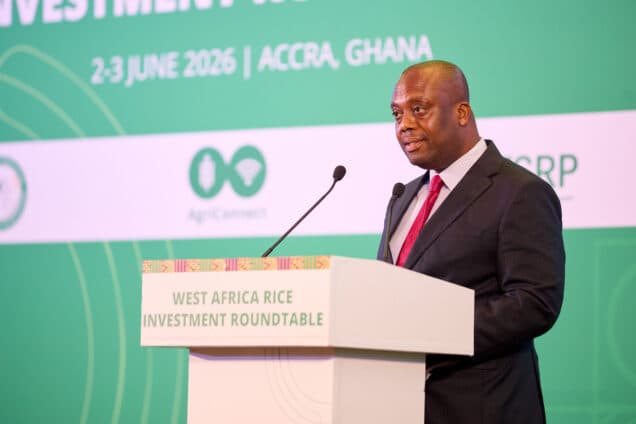
Speaking at the 2026 West Africa Rice Investment Roundtable in Accra, Mr. Ampem revealed that countries in the sub-region spend between US$3 billion and US$4 billion annually importing rice, describing the situation as economically unsustainable and a missed opportunity for job creation and economic growth.
“Billions of dollars in foreign exchange leave our economies every year to finance demand that we should increasingly be meeting ourselves,” he said.
According to him, the challenge facing the region goes beyond national rivalries over food preferences.
“The real Jollof competition before us is not whose rice tastes better. It is whether West Africa can finally produce enough rice to feed itself competitively,” he stated.
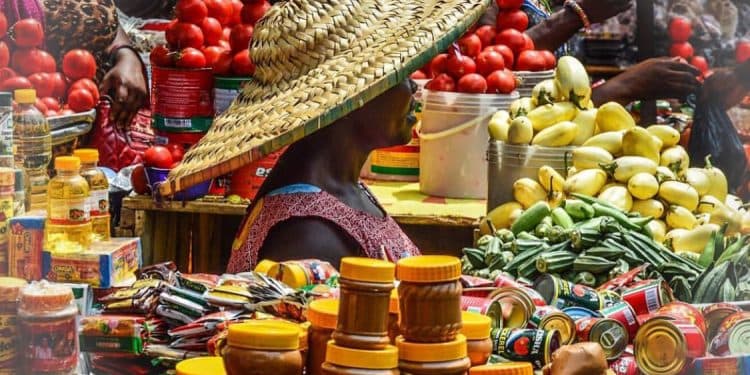
Mr. Ampem warned that the widening gap between production capacity and consumption is placing significant pressure on economies across the region. He noted that excessive imports drain scarce foreign exchange reserves, weaken domestic agricultural value chains, expose countries to external supply shocks and limit the jobs and prosperity that could be generated from a commodity widely consumed across West Africa.
“The current situation is economically unsustainable and strategically untenable. It drains scarce foreign exchange, weakens domestic value chains, exposes our countries to external supply shocks, and limits the jobs and prosperity that should arise from a commodity we consume so heavily,” he said.
The Deputy Minister stressed that West Africa has the resources needed to become self-sufficient in rice production.
“We have the land. We have the water resources. We have the farmers. What we have lacked, for far too long, is sufficient transformational capital capable of unlocking this potential at scale,” he added.
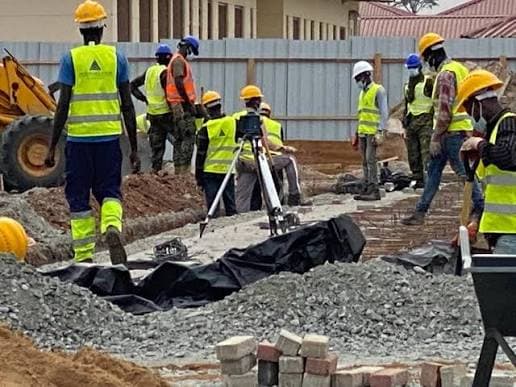
To address the challenge, Mr. Ampem called for long-term investment in irrigation systems, storage facilities, milling plants, logistics networks and processing infrastructure. He said the sector requires patient and risk-tolerant capital capable of supporting sustainable growth rather than focusing solely on commodity trading.
“It means risk-tolerant capital that invests in storage, milling, logistics and processing, not just commodity trading. It means strategic regional capital that sees a West African rice economy, not fragmented national markets separated by borders,” he explained.
He expressed confidence that increased investment would improve farmers’ livelihoods, strengthen domestic value chains and make rice production and processing more attractive to investors.
“That is the scale of ambition this moment demands. I am confident that if we fundamentally rethink how we see rice, this region can unlock and attract the capital required to transform the sector,” he said.
The West Africa Rice Investment Roundtable, organised by the ECOWAS Commission on June 2, 2026, brought together representatives of ECOWAS member states, regional and international financial institutions, development partners, private sector leaders and investors to explore strategies for transforming the region’s rice industry and reducing reliance on imports.