A member of the National Democratic Congress communications team, Theophilus Dzimegah, has pushed back against claims that the majority of road contracts under the government’s Big Push programme are being awarded through sole-sourcing.
His response follows a report by The Fourth Estate which alleged that nearly 90 percent of road contract funds under the initiative were awarded without competitive tendering.
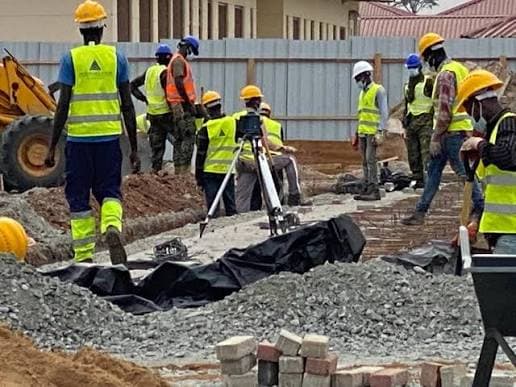
The report further claimed that the Ministry of Roads and Highways had effectively become a “factory” for sole-sourced contracts, awarding 107 contracts within seven months, none of which, it said, went through open competitive bidding. According to the outlet, 81 of those contracts, valued at over GH¢73 billion, were sole-sourced, while the remaining 26, worth about GH¢8 billion, were awarded through selective tendering.
However, speaking on Good Morning Ghana on Metro TV on March 24, 2026, Dzimegah disputed the figures, insisting that only 34 percent of the contracts were sole-sourced.
“Currently, only 34 percent of the contracts are sole sourcing, not 90 percent as has been claimed,” he said.
Dzimegah argued that some of the projects captured under the Big Push programme were inherited from previous administrations, including contracts awarded during the tenure of the New Patriotic Party but later abandoned despite payments having been made.
He explained that in certain cases, contractors already on-site and familiar with the projects were re-engaged through restricted tendering to avoid delays and additional costs.
“Instead of repackaging and re-awarding such projects entirely, it is more efficient to renegotiate with contractors already working on them, especially where payments had stalled,” he said.
On the broader issue of procurement, Dzimegah maintained that factors such as contractors’ capacity to mobilise quickly, their institutional knowledge, and financial strength informed the awarding process.
He also defended the government’s decision to prioritise local contractors, saying it was aimed at building domestic capacity, creating jobs, and ensuring that profits from infrastructure projects are retained within the country.
According to him, dividing road projects into multiple lots allows several contractors to work simultaneously, speeding up delivery timelines and reducing prolonged disruptions for road users.
Addressing concerns about accountability and value for money, Dzimegah pointed to measures being implemented to ensure financial discipline. These include verification processes before payments are made and efforts to prevent duplication of contracts.
He also emphasized the role of a proposed value-for-money framework, drawing parallels with oversight institutions in countries such as the United States, the United Kingdom, and Canada.
“Payments will only be made after verification that work has been done and properly audited,” he stated.
The debate over procurement practices under the Big Push programme continues to generate public interest, with analysts calling for greater transparency to balance efficiency with accountability in the awarding of public contracts.