Minority Leader in Parliament, Alexander Afenyo-Markin has raised concerns over what he describes as systemic bias against Ghanaian-owned businesses, warning that uneven treatment could undermine efforts to build a resilient local economy.
According to him, political debates in Ghana often focus disproportionately on indigenous companies, while foreign-owned firms escape similar scrutiny.
“It is Ghanaian businesses that are attacked along political lines, whether New Patriotic Party or National Democratic Congress, but foreign businesses are not treated the same way,” he said.
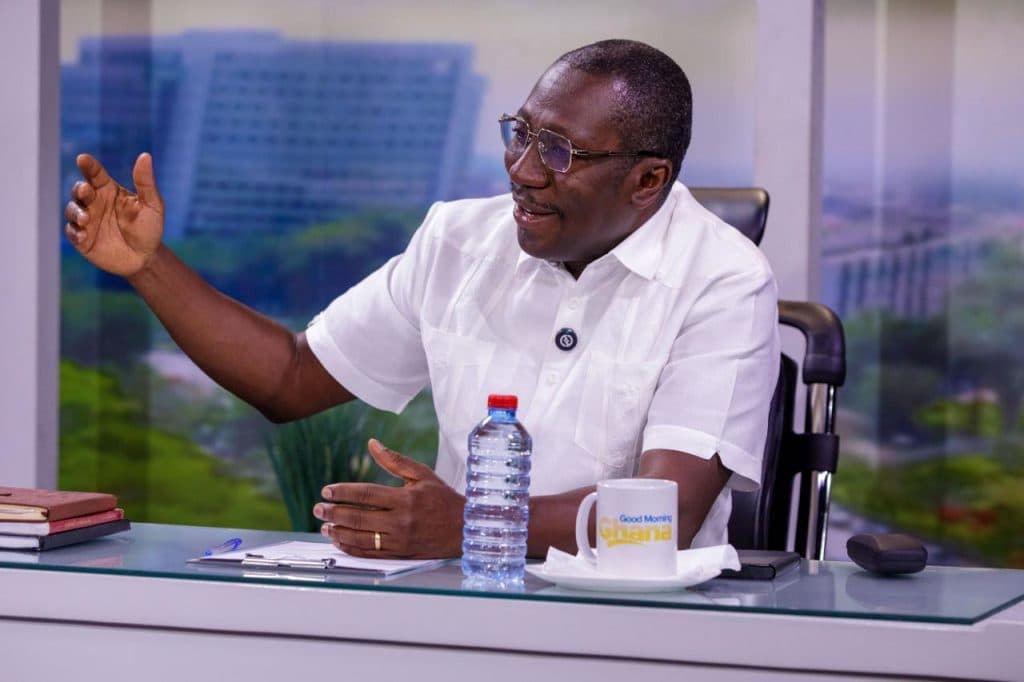
Speaking with Moro Awudu on Metro TV’s Good Morning Ghana on April 6, Afenyo-Markin, who described himself as an active industry player, further alleged that many of the most lucrative government contracts continue to be awarded to foreign firms, leaving local enterprises struggling to compete.
He also claimed disparities in payment practices, alleging that foreign-owned companies are often paid promptly, while Ghanaian contractors face significant delays.
“This is not hearsay. We operate in the same space and we know when payments are made,” he said.
Despite acknowledging ongoing efforts by the government, including macroeconomic stabilisation measures led by the Finance Ministry, he warned that progress could prove unsustainable without deliberate support systems for local businesses.
“It will become a bubble if we fail to strengthen the foundations,” he cautioned.
The Minority Leader called for stronger engagement between government and private sector stakeholders, citing consultations with groups such as the Ghana Union of Traders’ Associations, the Ghana Employers Association, and the Association of Ghana Industries.
He said concerns raised by these groups informed the Minority’s recent policy positions in Parliament.
Among the issues emphasized were stalled industrial projects due to lack of working capital, including factories established under government initiatives that are currently idle despite their job creation potential.
Afenyo-Markin stressed the need for long-term industrial policy and continuity, drawing comparisons with countries where family-owned businesses have thrived for generations with consistent state support and structured financing.
“We must be deliberate as a nation in building businesses that last beyond political cycles,” he said.
He also criticised what he described as politically motivated disruptions to businesses, where companies perceived to be aligned with one political party face challenges when power changes hands.
“Destroying or starving businesses because of perceived political affiliation only harms the national economy,” he noted.
On taxation and policy implementation, he took aim at recent reforms, particularly in the Value Added Tax system, arguing that insufficient consultation with stakeholders has led to confusion and increased costs for businesses.
He questioned the rollout of technology-driven systems, including the use of artificial intelligence in tax administration, warning that deploying such tools without adequate stakeholder engagement could produce unintended consequences.
“I support technology and AI, but you cannot deploy it blindly,” he said.
He cited complaints from traders who claim that port clearance costs have risen significantly under the new system, urging government to reassess its approach and ensure transparency in how such systems operate.
Afenyo-Markin emphasised that effective governance requires continuous dialogue with industry players, not post-policy consultations.
“If government wants to build an enterprise-driven economy under President John Dramani Mahama, then it must listen more, not only to the Minority, but to the business community,” he said.
He concluded by calling for a national reset in governance and economic management, urging an end to cycles of political retaliation and mistrust, and advocating for a collaborative approach that prioritises long-term national development over partisan interests.