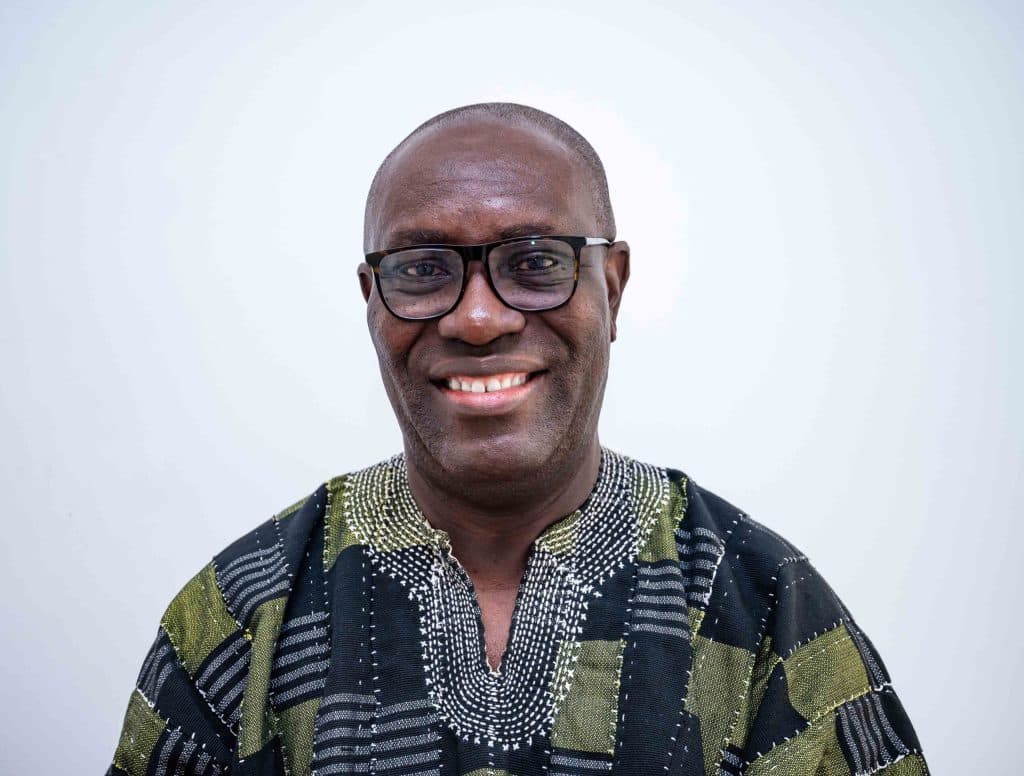
The Chairman of the Governing Board of the Ghana Statistical Service, Dr. Anthony Yaw Baah, says Ghana is making progress in reducing multidimensional poverty, but major inequalities still exist between districts.
Speaking at the launch of the District-Level Multidimensional Poverty Incidence and Ranking Factsheets in Accra on Monday, May 18, Dr. Baah said the new data offers a clearer picture of poverty across the country and should guide policy decisions and resource allocation.
According to him, the report marks the first time Ghana has consistently produced multidimensional poverty estimates for all 261 districts over several years.
“It means we are now able to understand poverty with much greater precision and much greater fairness,” he said. “It means we can now move beyond broad national averages and see the realities facing individual districts and communities.”
The event was attended by Finance Minister Cassiel Ato Baah Forson, Minority Leader Alexander Afenyo-Markin, representatives of Parliament, development partners, civil society groups and members of the diplomatic corps.
Dr. Baah explained that multidimensional poverty goes beyond income levels and examines access to essential services such as education, healthcare, clean water, sanitation, housing, electricity and employment opportunities.
“Development must ultimately be measured by the wellbeing of people,” he noted.
The report found that 250 out of 261 districts recorded reductions in multidimensional poverty between 2021 and 2025.
Dr. Baah described this as encouraging, saying it showed that “policy interventions, investments, and development programmes can improve lives when they are properly targeted and effectively implemented.”
However, he said poverty remains unevenly distributed across the country.
He pointed to the contrast between Yunyoo Nasuan District, which recorded the highest multidimensional poverty incidence in 2025 at 51.6%, and Ayawaso North Municipal, which recorded the lowest at 5.5%.
“These are not simply rankings. They are signals for action,” he said.
Dr. Baah also highlighted districts that made notable progress over the period under review.
According to him, Wa West District reduced multidimensional poverty from 61.9% in 2021 to 24.0% in 2025, while Sekyere Afram Plains District also recorded significant improvements.
“These examples demonstrate that even districts facing high deprivation can make significant progress when supported with the right investments, leadership, and policy focus,” he said.
He warned, however, that some districts experienced worsening poverty levels or only marginal improvements, stressing that development gains “cannot be taken for granted.”
Dr. Baah said the factsheets would help government agencies, Metropolitan, Municipal and District Assemblies, Parliament, development partners and civil society groups make better-informed decisions.
He urged institutions to use the findings in policymaking, budgeting and development planning.
“The value of statistics lies not in their publication, but in their ability to improve lives and expand opportunities for all people across Ghana,” he stated.